Tissot Revives the 1985 RockWatch in Alpine Granite
Formed by nature. Unearthed by Tissot. The RockWatch from Switzerland – thus proclaimed the advertising film that the brand released in 1986 to publicise its latest product line. The Tissot RockWatch had a truly unique selling point: Its case was hewn out of solid granite sourced from the Swiss Alps, a commercial concept that had not been attempted before or since. The RockWatch had diminutive proportions but an outsized impact on the fortunes of Tissot as well as the revival of Swiss watchmaking, and now Tissot is resurrecting the phenomenon 40 years after its debut.
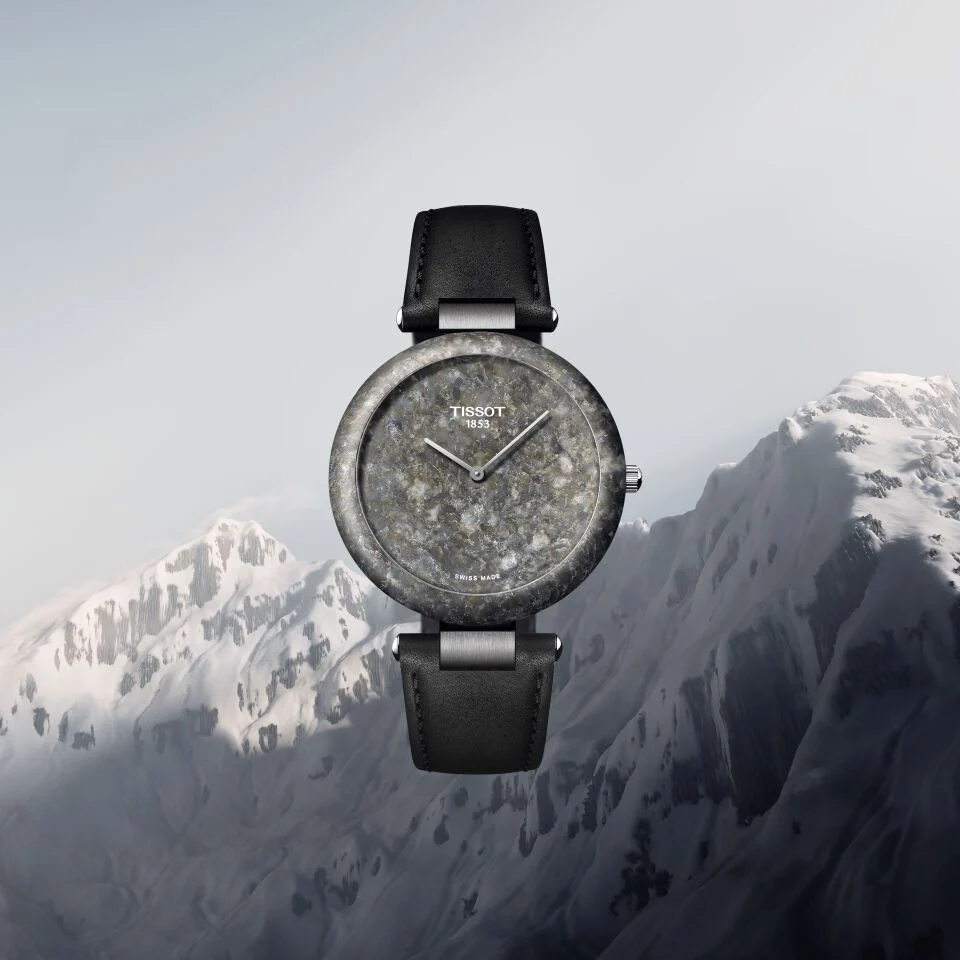
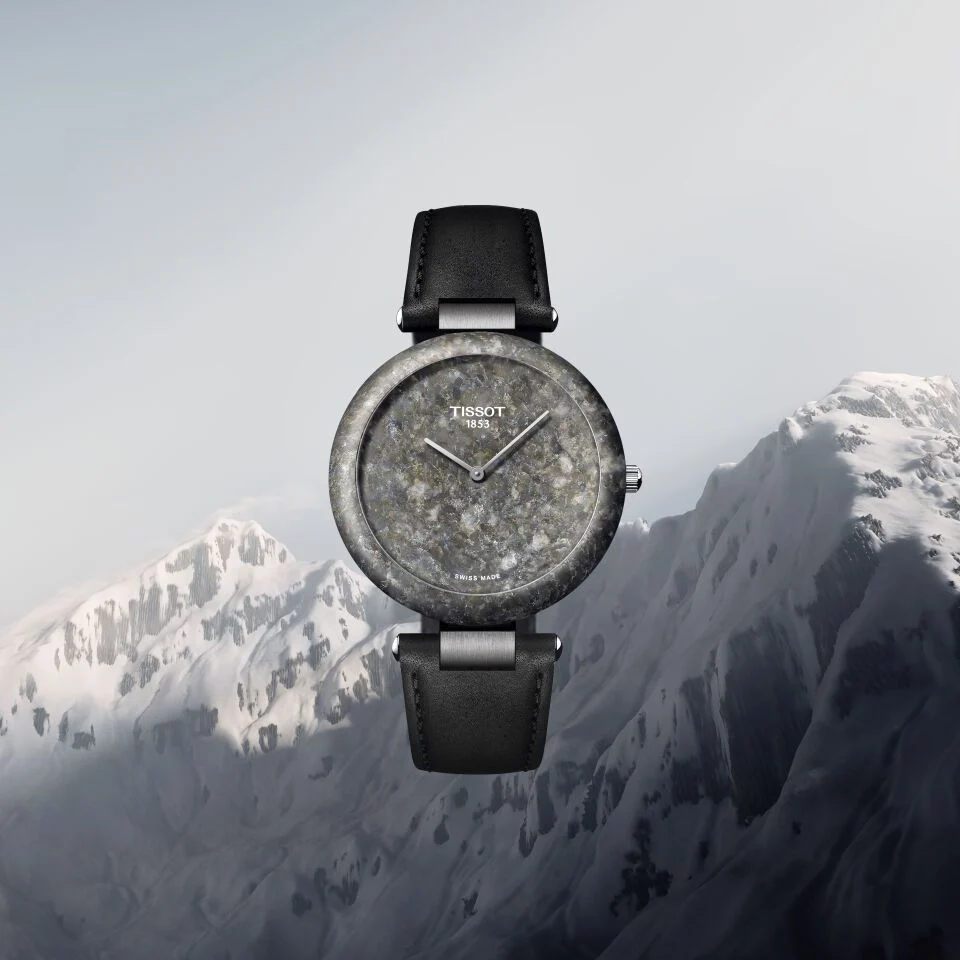
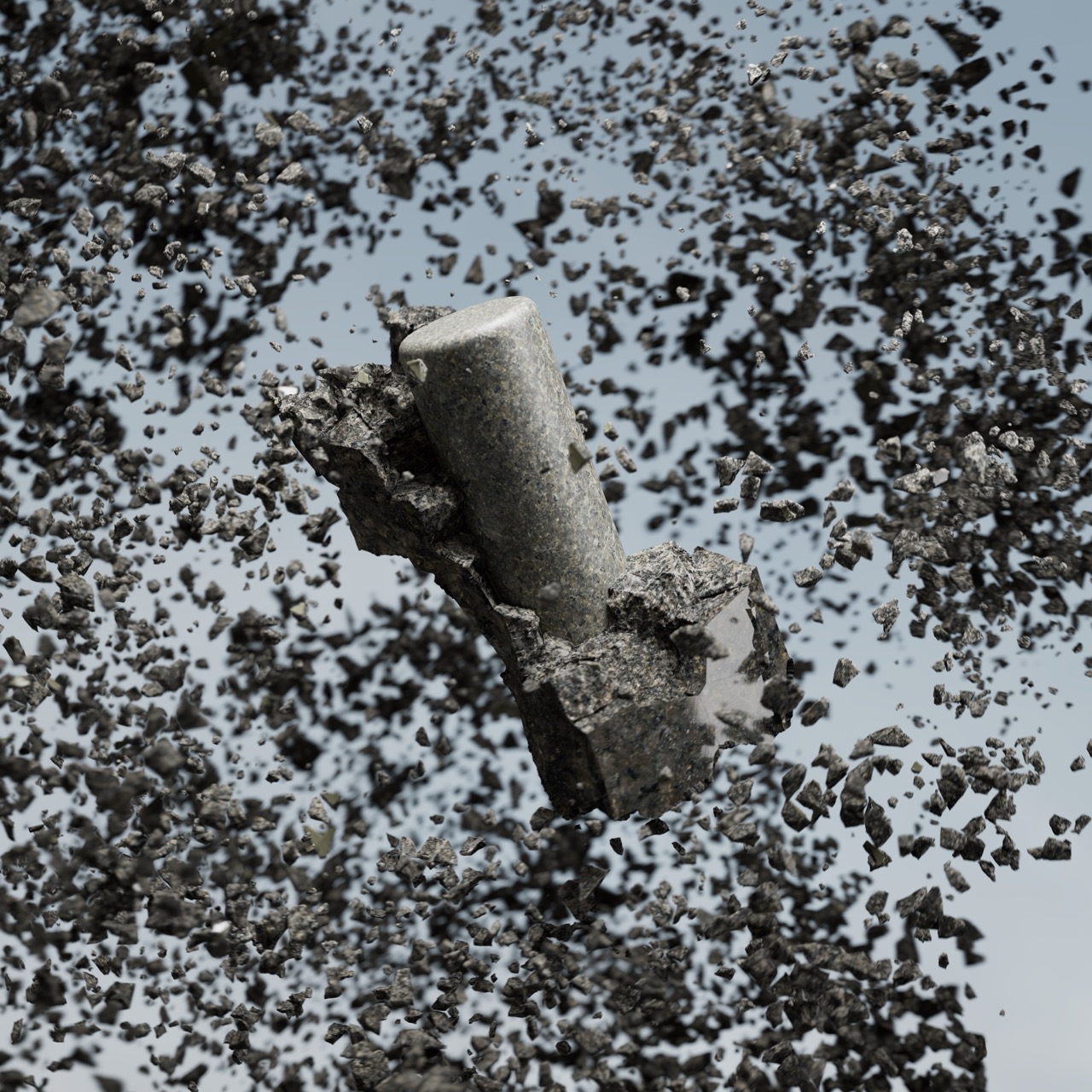
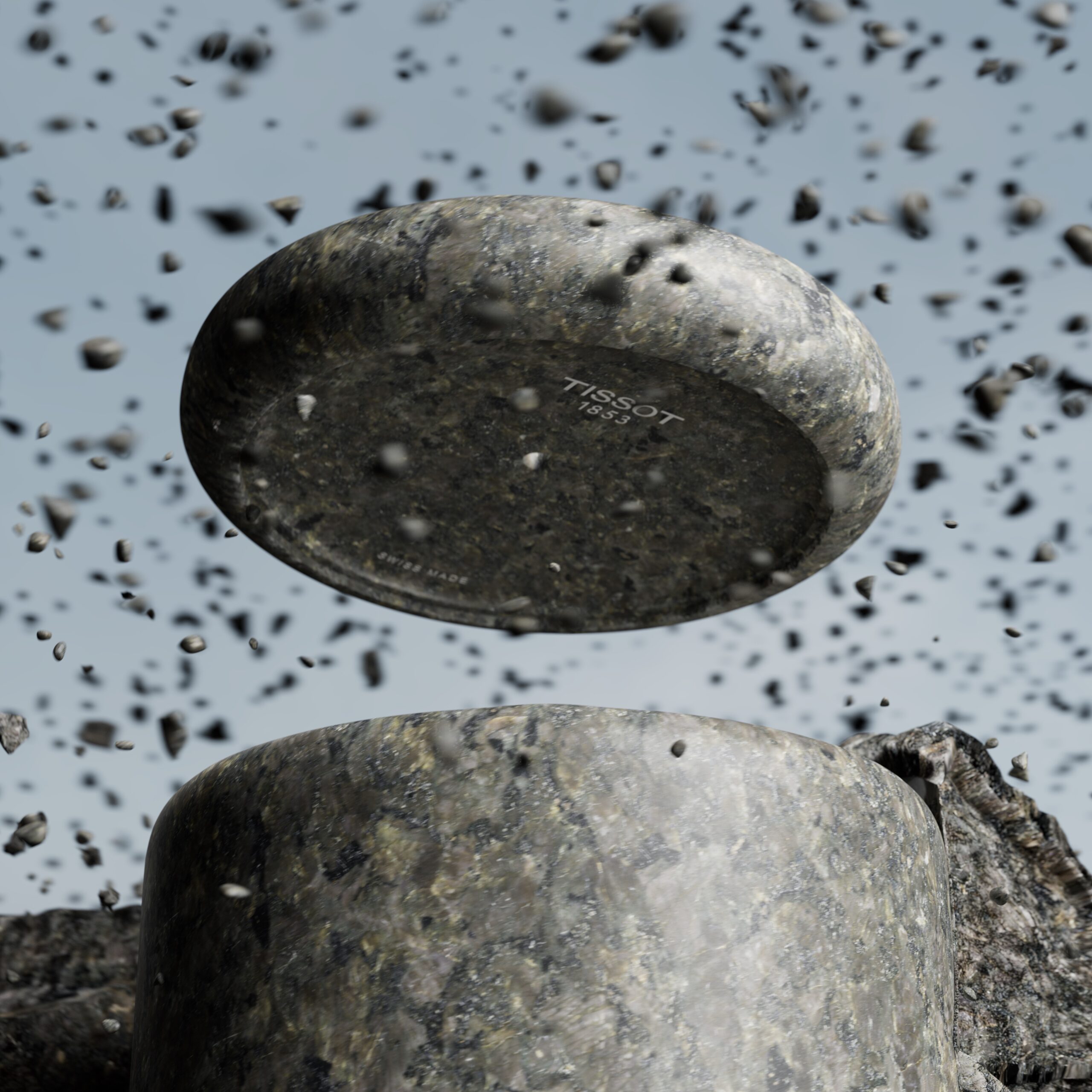
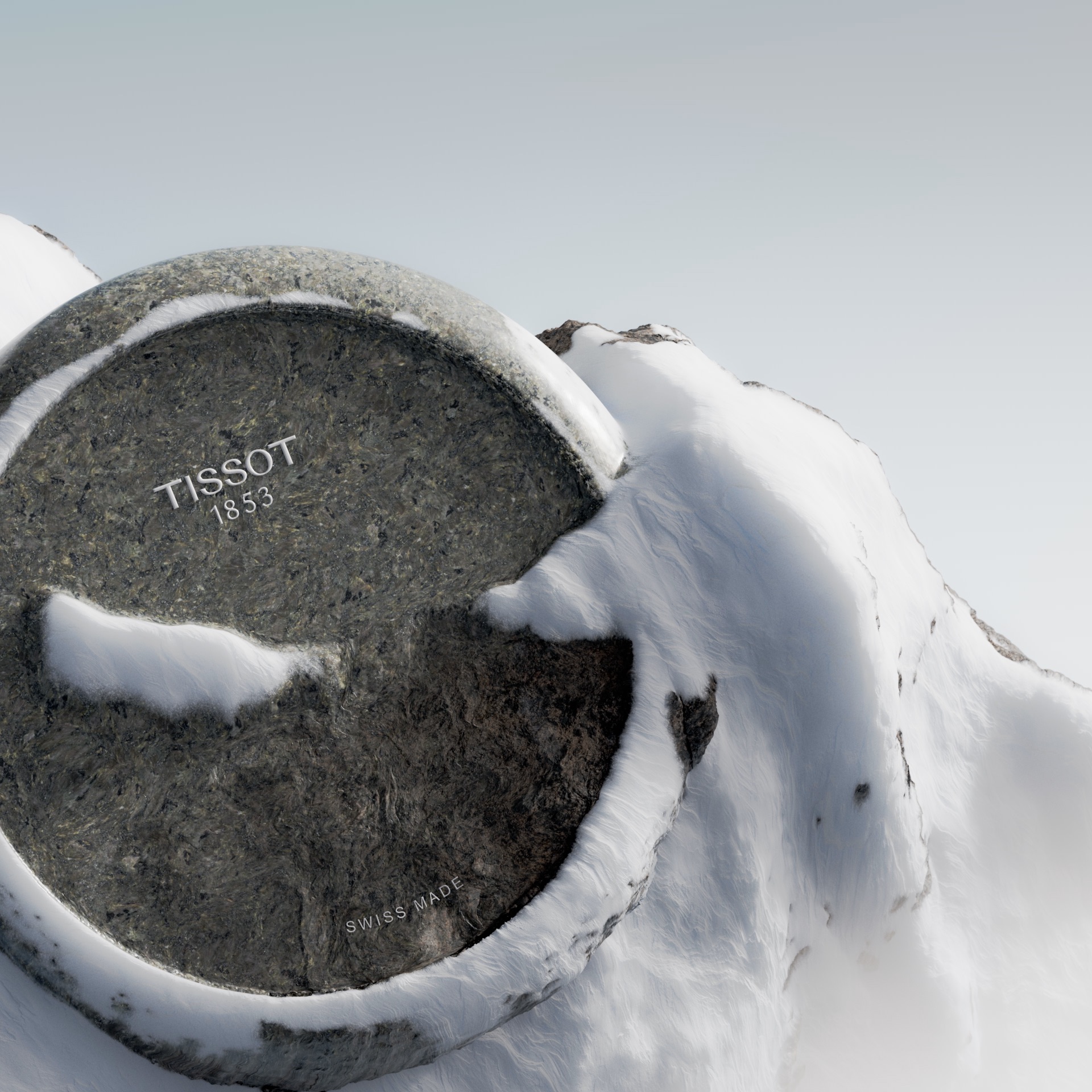
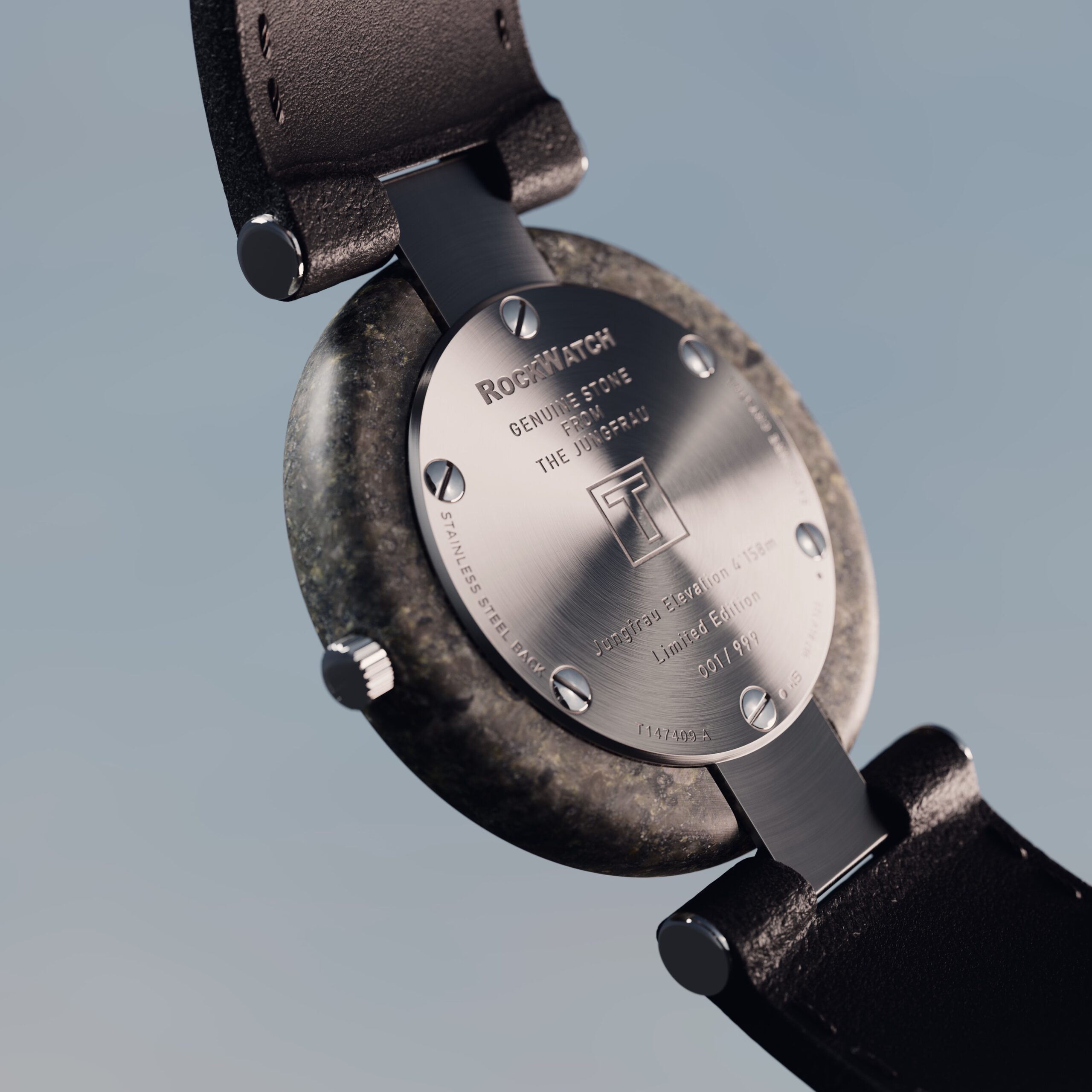
The Tissot RockWatch of 2025 is a faithful interpretation of its predecessors. Released in a limited run of 999 pieces, this RockWatch features baton hands of nickel-plated stamped brass, a quartz movement, a gently domed sapphire crystal with anti-reflective coating, and a black leather strap, and at its centre, a 38mm case made of granite from the 4,158m-tall Jungfrau, one of the major peaks of the Bernese Alps, in western Switzerland. The granite blocks are milled into cylinders, then cut into smaller sections to reduce internal stress on the materials. For authenticity, the task of machining each case was entrusted to the very artisans who crafted the original RockWatches from 1985, who shaped, ground, polished and hollowed out the discs with exacting precision.
A steel container inside the stone case holds the movement in place, while a thin layer of acrylic paint gives the stone a crisp, lasting finish. The caseback, engraved with “Jungfrau – Top of Europe” and a serial number, is screwed into place, and the assembly is completed with the bracelet. The final result is a harmonious and understated timepiece that places the qualities of Alpine granite front and centre, but the RockWatch is much larger than its 38mm case: It is also a crystallisation of the history of Tissot, and in some ways, of the Swiss watch industry too. A number of trends and events converged to catalyse the development of the RockWatch.
The quartz crisis/ revolution kicked into high gear in the 1970s, depressing the price of watches, while the 1973 oil crisis brought about economic stagflation. This impacted Tissot severely: In 1974 it sold 919,200 watches, but 10 years later that figure had dropped precipitously to 14,140. Concurrently, the 1970s and 1980s were distinct for their embrace of bright colours, irreverence, experimentation and innovation, resulting in novel watch features such as two-tone metals, molded plastic, integrated bracelets, rubber straps and even digital calculators.
The accessibility that quartz watches afforded and the appetite for timepieces with vibrant personalities gave rise to a shift towards perceiving watches as fashionable accessories to be collected, a trend that contributed to the smashing success of Swatch watches after their 1983 launch, and to the reignition of Swiss watchmaking that decade. In the case of Tissot, the mission was to reinvigorate the brand, and the moonshot demanded a star product.
The RockWatch was Tissot’s answer. The new watch was to be made completely out of stone, with a nearly bare dial – a time-only quartz watch with no indices, no minute track, and not even a second hand; the focus was entirely on the stone and its qualities. The idea came from then-Tissot directors Urs Hecht and Alain Spinedi; Ernst Thomke, CEO of Société de Microélectronique et d’Horlogerie (the forerunner of the Swatch Group); and Peter Kunz, a sculptor and gemstone consultant.
Within Tissot’s recent history, the 1969 launch of its Sideral collection introduced the use of fibreglass in watches, and the 1971 debut of the Astrolon represented the world’s first mechanical watch entirely made out of plastic, even the movement. Tissot was no stranger to pushing the boundaries of material applications, so a watch created from solid rock was not as radical as it seemed. To strengthen the connection to Swiss identity, Tissot selected granite sourced from different parts of the Swiss Alps, approximately 300 million years old, with naturally occurring colours and veining that endowed the material with a mottled, speckled or striated appearance.
Large blocks were machined into round pebbles measuring 23mm, 30mm or 33mm, and those were milled further to create the circular indentations and cavities on either side needed to accommodate the ETA 976.001 calibre quartz movement with a Renata SR616SW battery, the crown and winding stem, the handset, and the flat mineral glass. The yellow hour hand and red minute hand reference the colours of hiking signposts ubiquitous across the Swiss Alps. The assembly was screwed onto a round stainless- steel plate, to which the straps were connected, so as not to subject the stone case to mechanical stress. Some later versions featured bracelets composed of rods milled from the same type of stone as the case.
The RockWatch being priced accessibly (approximately USD 200 or CHF 300 apiece) meant a consumer could acquire a number of watches to suit different occasions or to express personal style, so it was marketed on its individuality mirroring that of its wearer. (A discussion of the merits of the contemporary retail price can be found in the Cover Watch segment). The RockWatch was launched in the US first, in December 1985, with Chicago, Boston and Atlanta as test markets, in a bid to reestablish Tissot’s footing in the country; the launch in Switzerland came in March 1986.
Marketing activations included inviting the Swiss sculptor Felice Bottinelli to chisel RockWatches out of granite boulders for window displays across Switzerland, as well as a seven-foot-tall working replica placed outside the New World Centre in Tsim Sha Tsui, Hong Kong, for the local launch of the RockWatch in November 1986. The same year, at the Expo 86 exhibition in Vancouver, Tissot installed a RockClock sculpture made of Swiss granite and Canadian jade.
Right out of the gate, the RockWatch delighted audiences. In the following years, the RockWatch was reinterpreted through an increasing variety of stone, even ones with fossilised coral, and specimens from other countries, such as Australian pink rhodonite, Brazilian aventurine and sodalite, and Kalahari jasper. The design of the RockWatch inspired other creations such as the Tissot PearlWatch of 1988 (with a mother-of-pearl case and dial) and WoodWatch in 1989, and even a reference made out of a solid piece of 18k yellow gold. Some 800,000 RockWatches were manufactured and sold before production ceased in 1994. The success of the RockWatch rejuvenated the brand, boosting it to a 16 percent market share of the Swiss watch industry, and revived Tissot’s presence in the US market, demonstrating consumer demand for aesthetics, material, variety, and a memorable storyline.
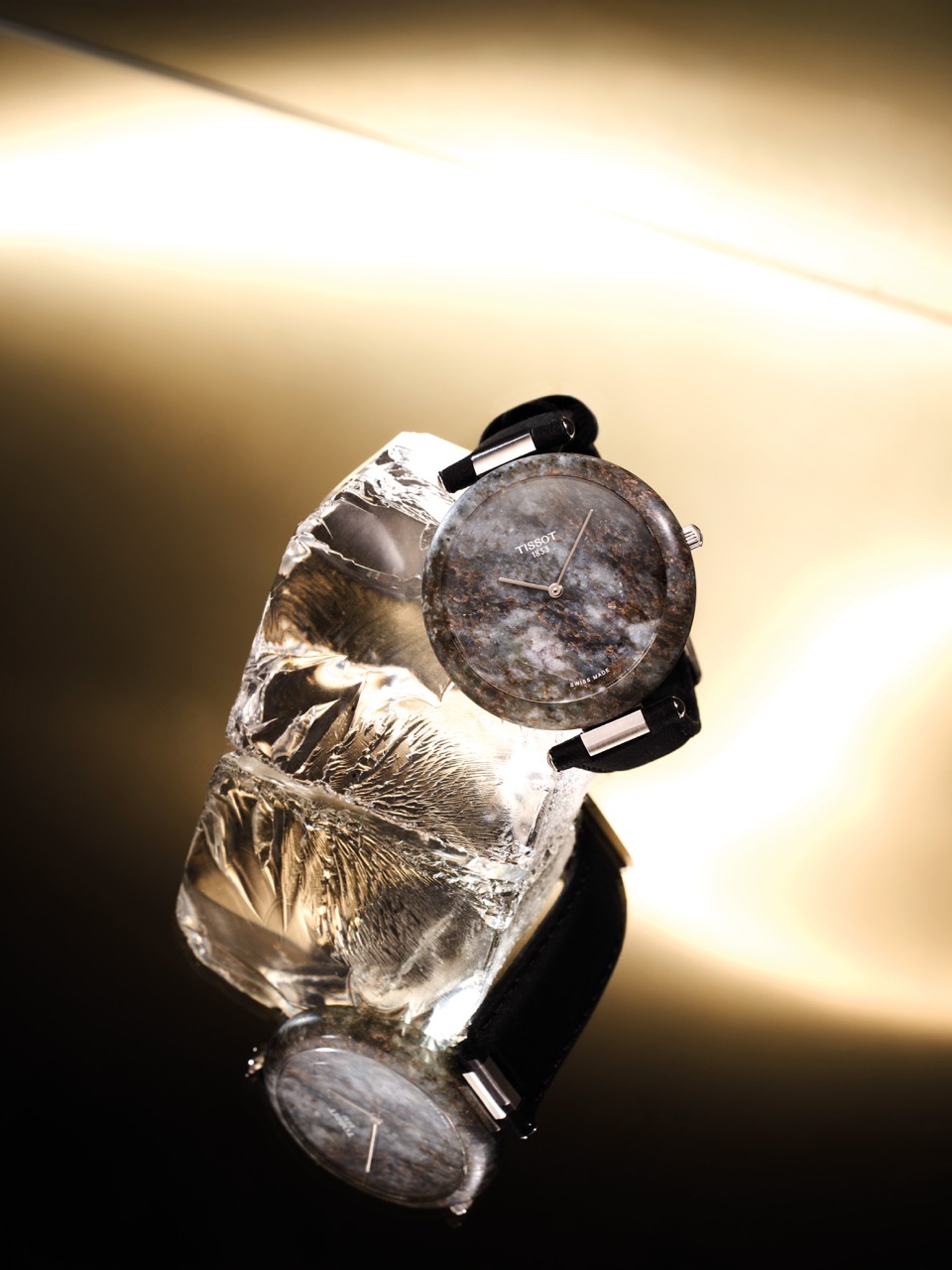
(Photography by Ching@GreenPlasticSoldiers, Styling by CK Khoo)
After the phenomenal reception of the refreshed Tissot PRX, born in 1978 and relaunched in 2021, and the 2023 return of the Sideral (both revivals overseen by Tissot’s current CEO, Sylvain Dolla), it was probably only a matter of time until the brand turned its attention to the RockWatch. Though original RockWatches abound on online marketplaces and resale sites, showing varying degrees of wear, and are not prohibitively expensive either (“It won’t cost you the Earth,” one reviewer commented in their YouTube video, perhaps fully aware of the wordplay), the RockWatch was never about being a timepiece laden with superlatives or setting records. Instead, it is a genuinely charming concept and proposition, backed by a romantic narrative and a beautifully unique material, all wrapped up in an elegant package that punched far above its weight.
Bright Spot
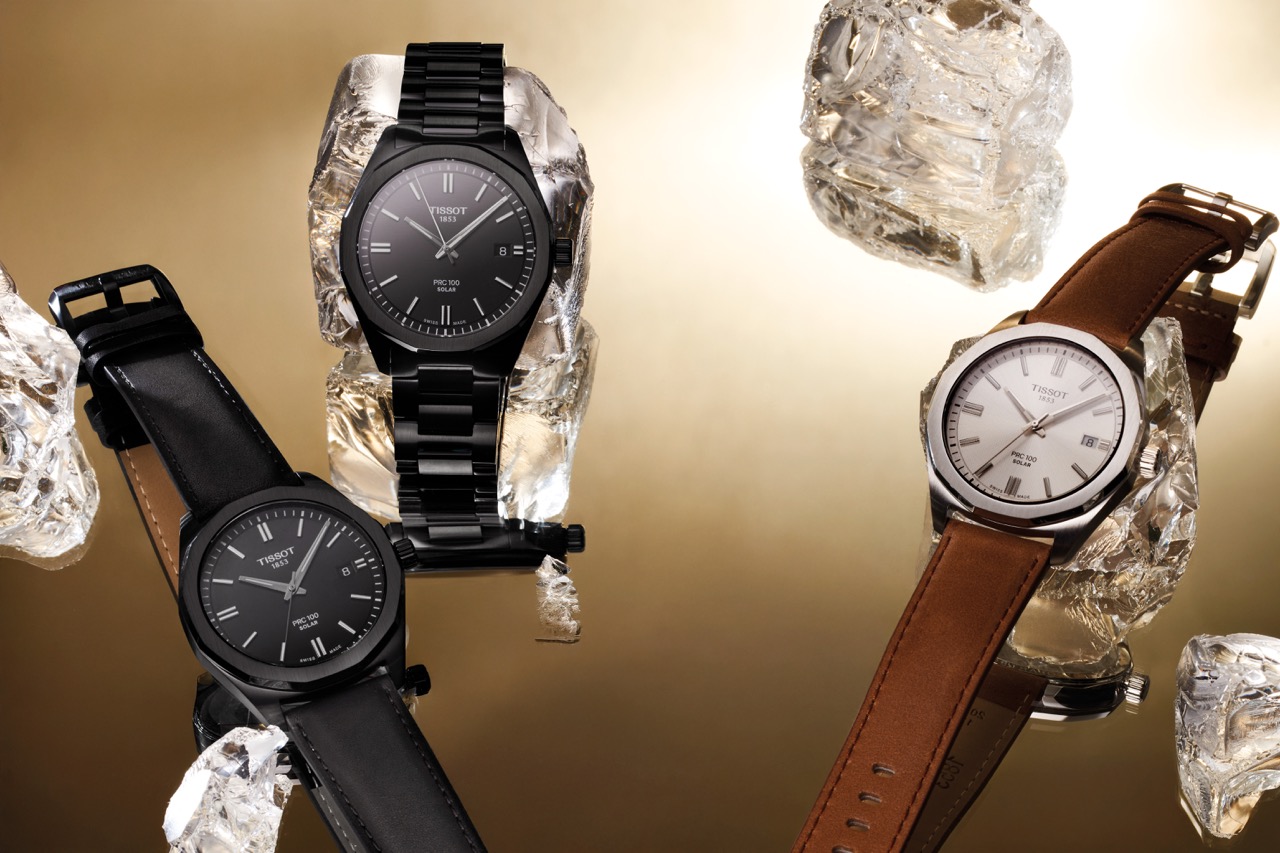
Tissot has been maintaining a fast tempo with its 2025 cohort of novelties, outfitting them with updated tech and refreshing their appearance. For its PRC 100 collection (PRC stands for Precise, Robust, Classic), designed to meld elegance with durability, Tissot introduces its proprietary Lightmaster Solar technology to create the PRC 100 Solar line. To our knowledge, this technology is the first of its kind to be pioneered and industrialised in Switzerland for watches. Almost all other such technology in Swiss Made watches is based on Japanese innovations, principally those of Citizen, and thus the Tissot PRC 100 Solar is a significant watch.
(Photography by Ching@GreenPlasticSoldiers, Styling by CK Khoo)
Though the brand has presented solar-powered watches starting in 2014, with the T-Touch Expert Solar, the Lightmaster Solar technology is an ingenious approach to rethinking capturing energy from light: Instead of photovoltaic components on or under the dial, as is the conventional practice, for the PRC 100 Solar novelties they are integrated as a hexagonal mesh, applied directly beneath the sapphire crystal to capture maximum light, whether from the sun or artificial sources. This creates an uninterrupted dial design, with the nearly invisible solar cells hidden in plain sight, and yet capable of efficiently harvesting light that passes through it. The light energy is transferred from the solar-cell mesh through a conductive strip to the low-consumption F06.615 quartz movement within the case.
The Lightmaster Solar is incredibly effective: A 10-minute charge generates enough energy for 24 hours of power reserve, and any excess energy can be stored in the rechargeable accumulator, which provides up to 14 months of power reserve from one full charge – a massive practical advantage for time-pressed folks. And if the battery ever runs low, the End of Energy signal kicks in, with the second hand ticking once every four seconds to indicate that a recharge is needed.
Distinguished by the PRC 100 collection’s distinct dodecagonal bezel, the solar-powered novelties feature sunburst dials and stick indices in a range of design variations. The 39mm versions comprise cases in stainless steel or black PVD coating, silver or deep- blue dials, paired with steel bracelets, black PVD links, or a brown or black leather strap. The 34mm ones come in stainless steel with silver or light-blue sunray dials, a two-tone PVD rose-gold version, and a full yellow- gold PVD. A depth rating of 100m rounds out the suite of practical features.
Right Time
(Photography by Ching@GreenPlasticSoldiers, Styling by CK Khoo)
Another recent update can be found within the Tissot Ballade collection, which has undergone numerous cycles of revision over the decades. The Tissot Ballade debuted in 1994 as a quartz model, intended to carry both men and women from day to night, with a clear, readable dial and polished finishing. In 1997, the Ballade was updated with the new Autoquartz movement, which integrated a self-winding movement with quartz timekeeping, then the Ballade Automatic line was introduced in 2016, which brought with it the silicon balance spring in the form of the Powermatic 80 movement and the signature 80 hours of power reserve. The collection was revamped in 2024, on its 30th anniversary, with fluted bezels (a key feature of Tissot’s watches from the 1950s) and textured dials for its quartz-powered 40mm and 34mm references.
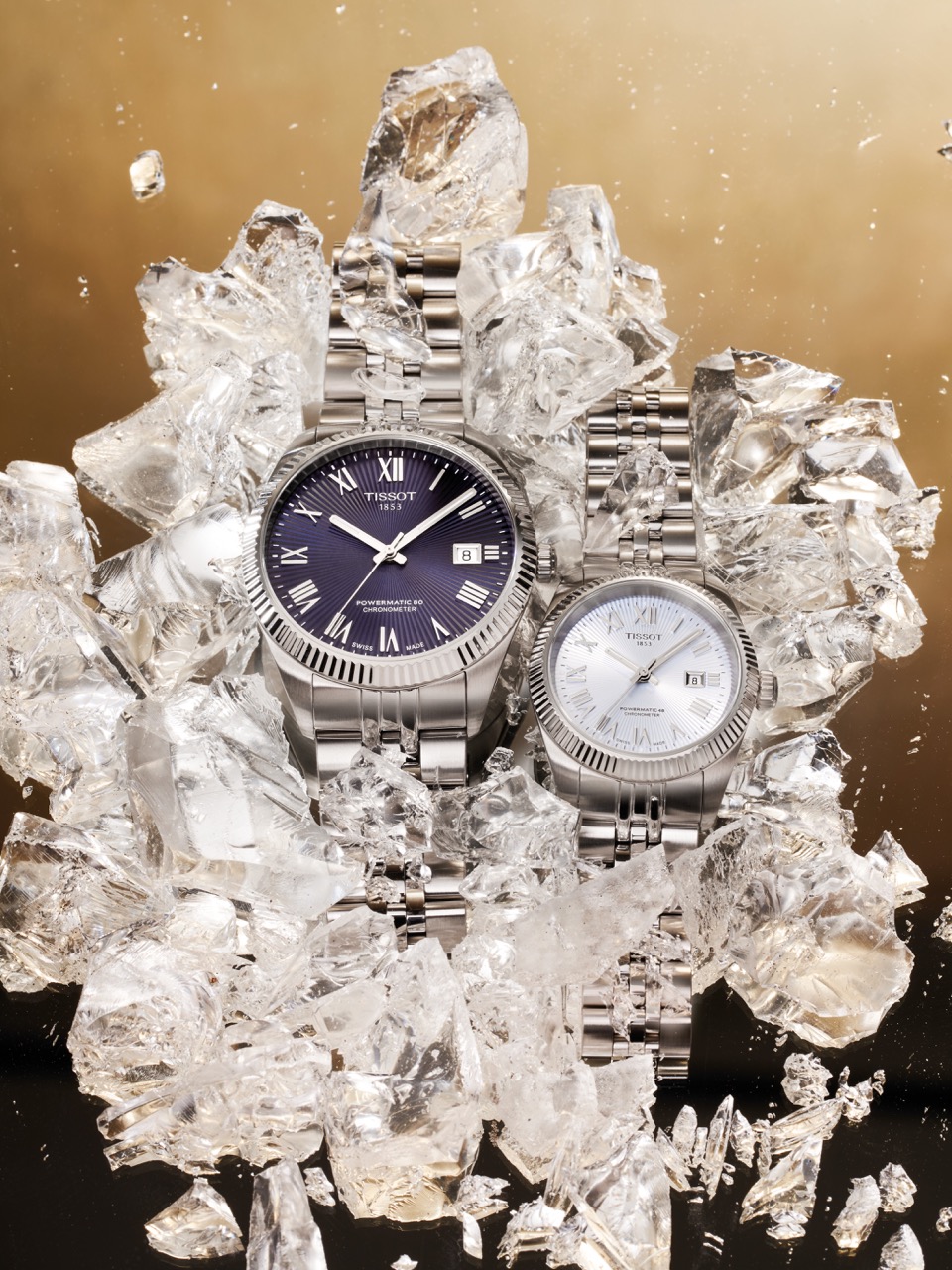
This year, in stepping up the accuracy and reliability of the Ballade collection, Tissot unveils the Ballade COSC line, composed of seven references powered by automatic movements that have achieved COSC chronometer certification after 15 consecutive days of tests and evaluation. The 39mm quartet count on the Powermatic 80 movement for the aforementioned power reserve, while the 30mm trio are driven by the Powermatic 48 movement, with 48 hours of power reserve. These movements are based on the ETA 2824- 2 and ETA 2671, respectively, and both are fitted with anti-magnetic Nivachron hairsprings.
A classic steel watch with elegant proportions, timeless appeal and sporty energy, the Tissot Ballade has as its most striking aesthetic feature a fluted bezel and an embossed sunray dial that appear to line up precisely and continue from one to the other. Where the Tissot Ballade’s quartz predecessors bore baton markers, these latest references bear applied Roman numerals. Other features include a quick-change five-link bracelet with a butterfly clasp, polished and brushed surfaces, a see-through caseback, and a depth rating of 100m. The seven models comprise four 39mm ones – with silver, dark blue or dark green dials in full steel, plus a version with a silver dial and yellow-gold PVD on the bezel and midlinks – and three 30mm ones, with an ice-blue or silver dial in full steel, plus a version with a silver dial and rose gold PVD.
This story was first seen as part of the WOW #81 Autumn 2025 Issue
For more on the latest in luxury watch reads, click here.
The post Tissot Revives the 1985 RockWatch in Alpine Granite appeared first on LUXUO.