Opinion: A Broken Germany — Europe Confronts Its Economic Suicide
The year 2026 opens with a truth that no one can hide any longer. The industrial heartland of the continent, the bedrock of European prosperity for three decades, Germany has entered a structural recession. The Financial Times stated it clearly at the end of 2025: Europe’s largest economy will only painfully recover to its pre-2020-2022 level – that Germany of before the pandemic and the war in Ukraine, supported by cheap energy, globalized value chains, and a geopolitical stability that is now a thing of the past.
This is not a temporary setback. It is a regime shift.
But be warned, this is a model that is collapsing. Germany is not suffering from a skills shortage, nor from technological obsolescence. Germany is the victim of a series of political decisions—both German and European—that have methodically undermined its productive foundations. The question is no longer whether Berlin is going through a rough patch, but whether the European Union, through ideological blindness, has orchestrated the systemic weakening of its economic core.
The industrial agony
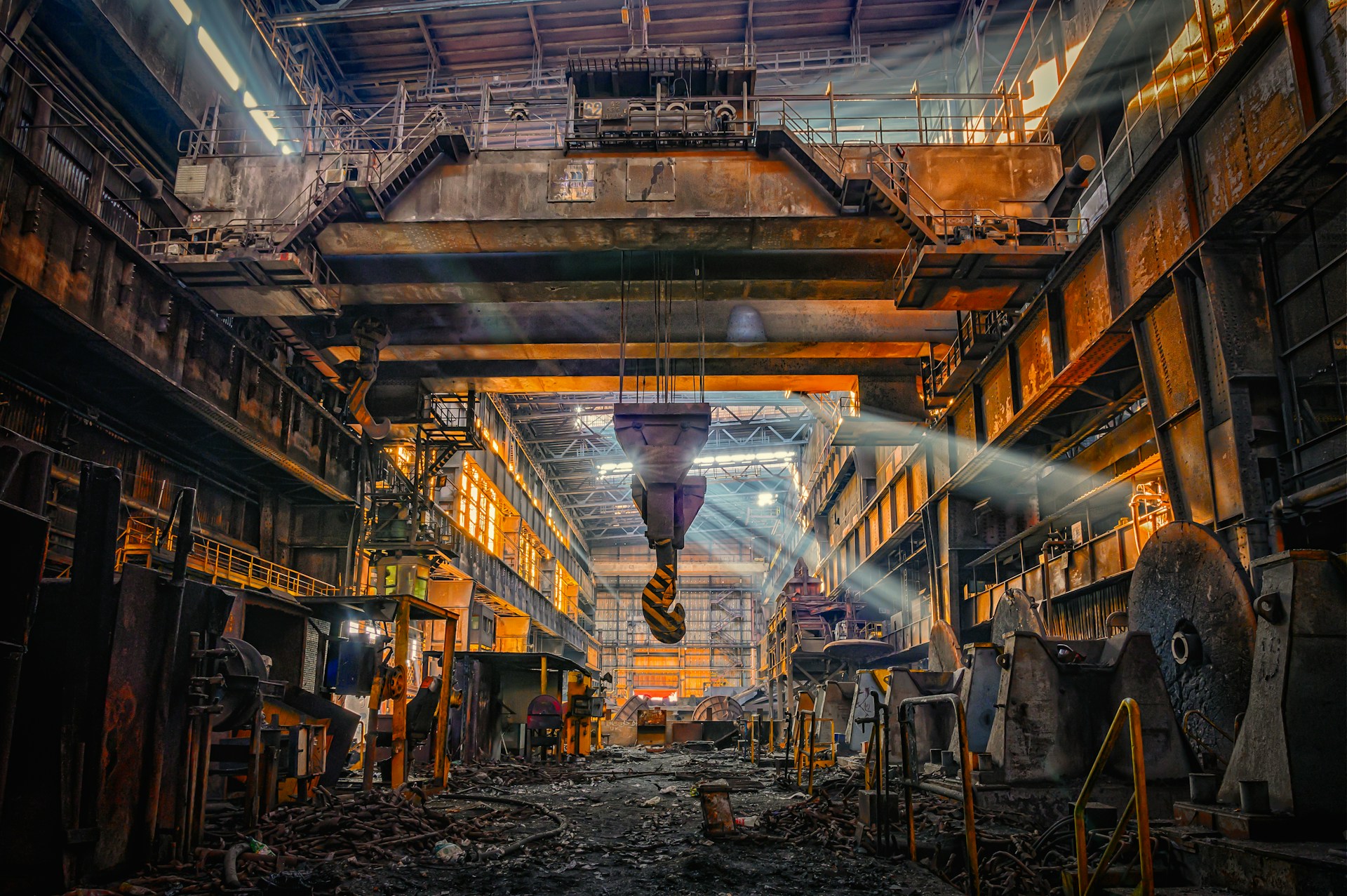
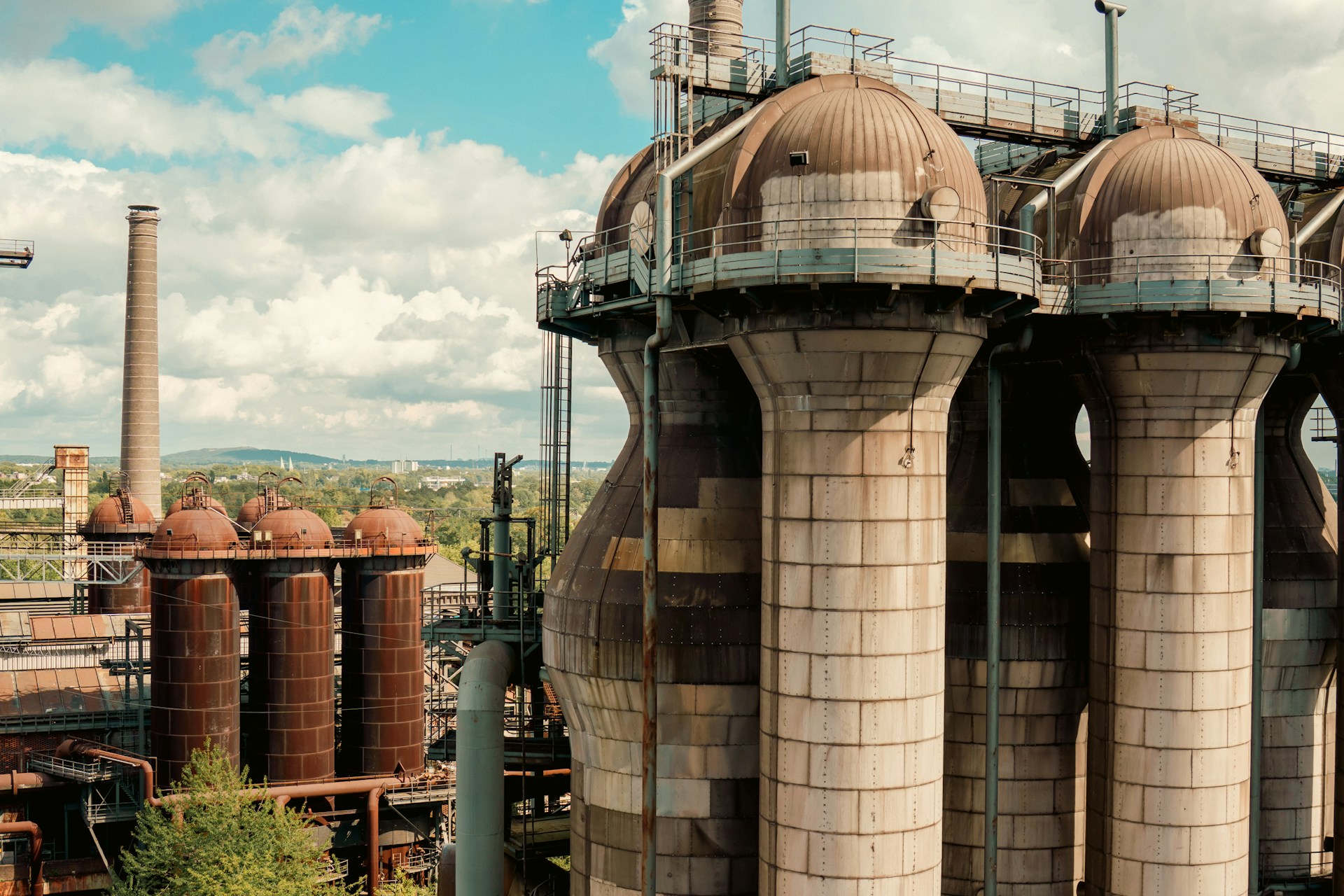
The figures are undeniable. By 2025, crude steel production there had fallen by approximately 10%. Iconic sites are closing or being stripped of their resources. The steel giants all cite energy costs that have become incompatible with any heavy-duty activity. The automotive industry, a pillar of the Mittelstand and a showcase of German expertise, is following the same downward trend. From 5.6 million vehicles produced in 2017, Germany’s output fell to just over 4 million in 2025. The 2026 projection is slipping towards 3.4 million.
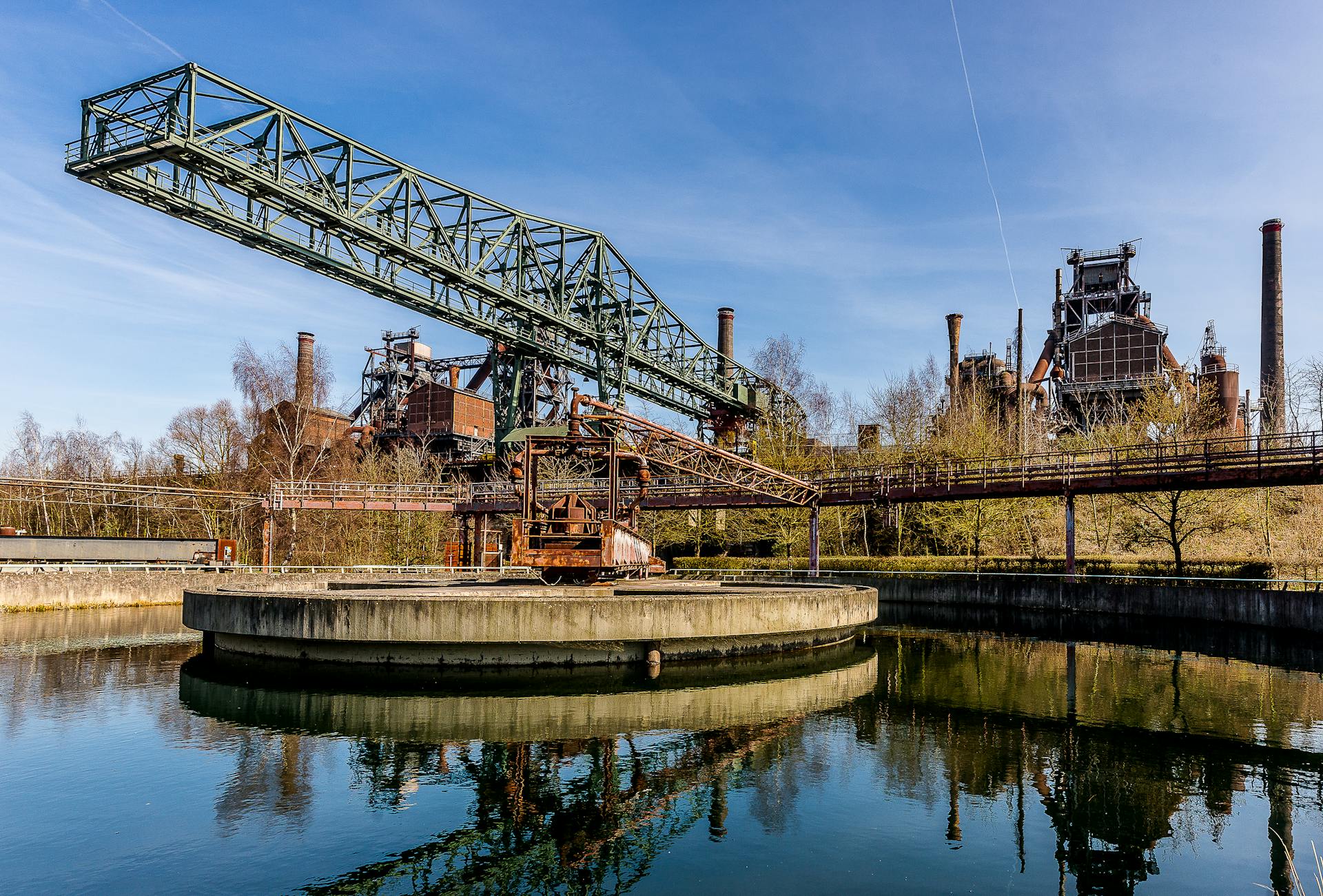
This is not about defending a bygone era, but about reiterating a fundamental fact. A decarbonized economy requires more steel, more copper, more chemicals, more machinery, and more infrastructure. You can’t build hydrogen, smart grids, batteries, or wind turbines on an industrial wasteland. The green transition presupposes a robust productive base. Yet, by 2026, Germany will have destroyed more capacity than it creates.
The pathology is imported: energy shock, geopolitical uncertainty, regulatory inflation. The engine isn’t seized up, but its fuel has been removed.
A political failure
Germany obviously bears its share of responsibility: a rushed nuclear phase-out, the illusion of perpetually cheap Russian gas, and chronic administrative inertia. These errors, which could have been corrected, were entrenched and then amplified by a European architecture that has become incapable of arbitrating between morality, geopolitics, and economic survival.
The break with Russia after 2022 was a historic turning point — one that could be morally justified — but it was handled with astonishing nonchalance. The destruction of the Nord Stream pipelines — for which responsibility remains a taboo subject — sealed a lasting dependence on American liquefied natural gas, which is structurally more expensive. In 2026, German industry is still paying the price for this shock: costly energy, chronic volatility, and a loss of comparative advantage.
A green transition conceived in Brussels as a normative ritual rather than an industrial policy has been superimposed upon it. While the climate objectives themselves are not in question, their implementation is undeniably dogmatic. Carbon taxes, environmental standards, and transformation obligations are piling up without a credible production strategy. Factories are closing faster than they are being transformed.
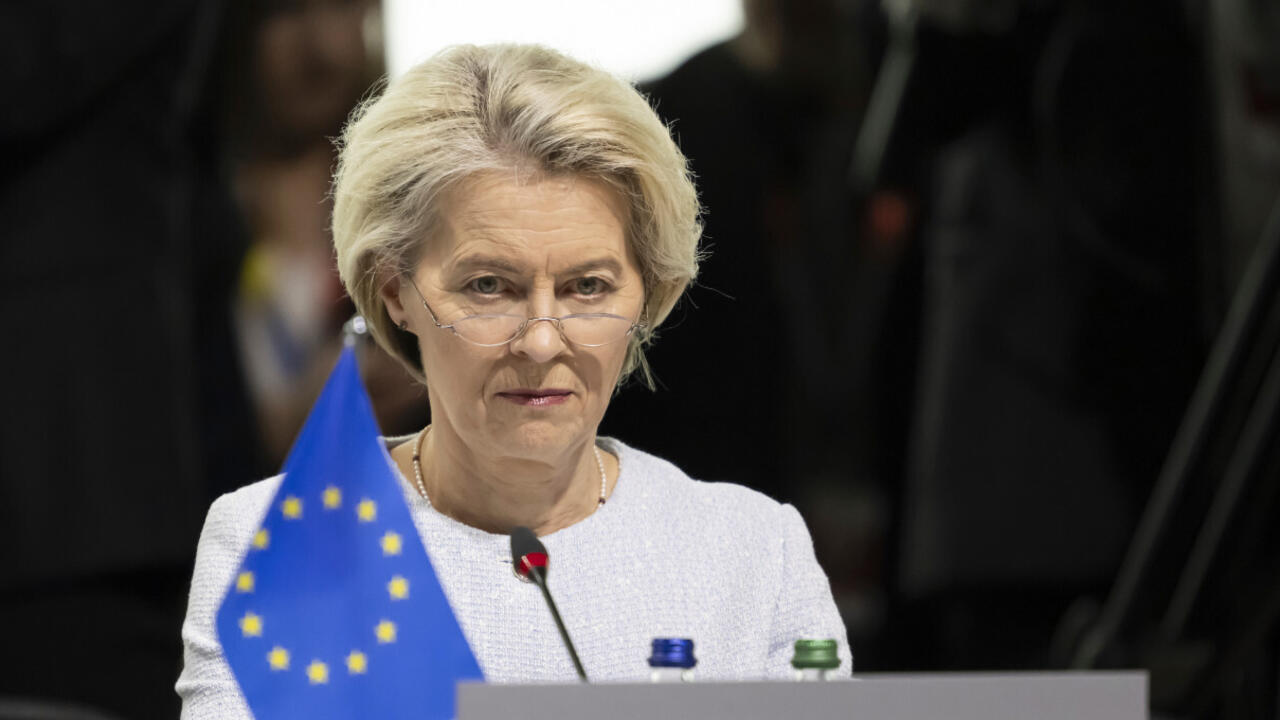
This deliberate and proactive approach, embodied by Ursula von der Leyen, manifests itself in prolonged sanctions, stricter regulations, and strategic centralization. Capitals are following suit, Berlin in particular, despite Germany — the continent’s leading economic power — acting as a disciplined executor.
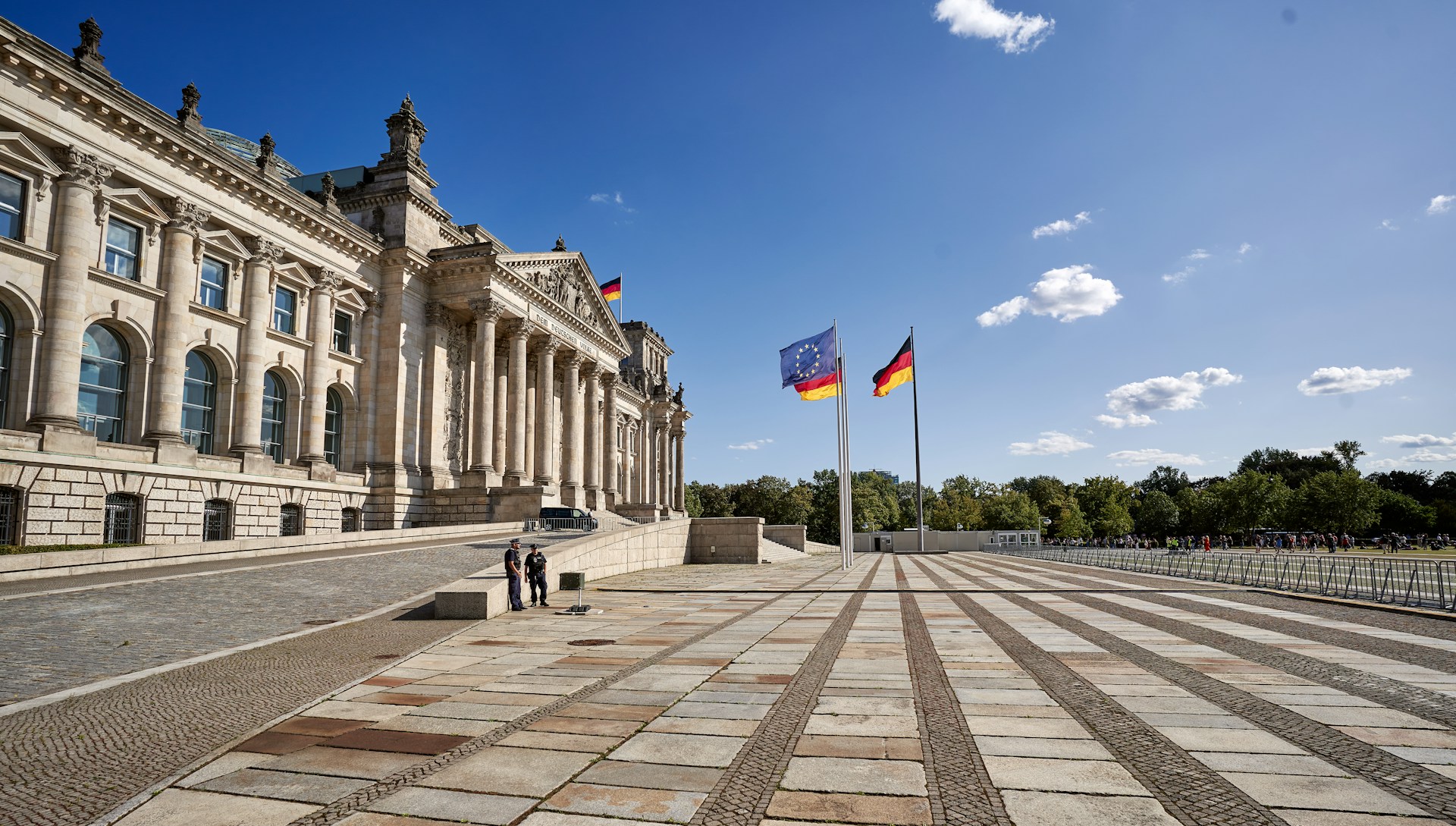
The contrast is stark: while Washington, under an openly protectionist Trump II administration, massively subsidizes its industry, Europe constrains its own. German companies invest more in Texas than in the Rhineland.
The social divide
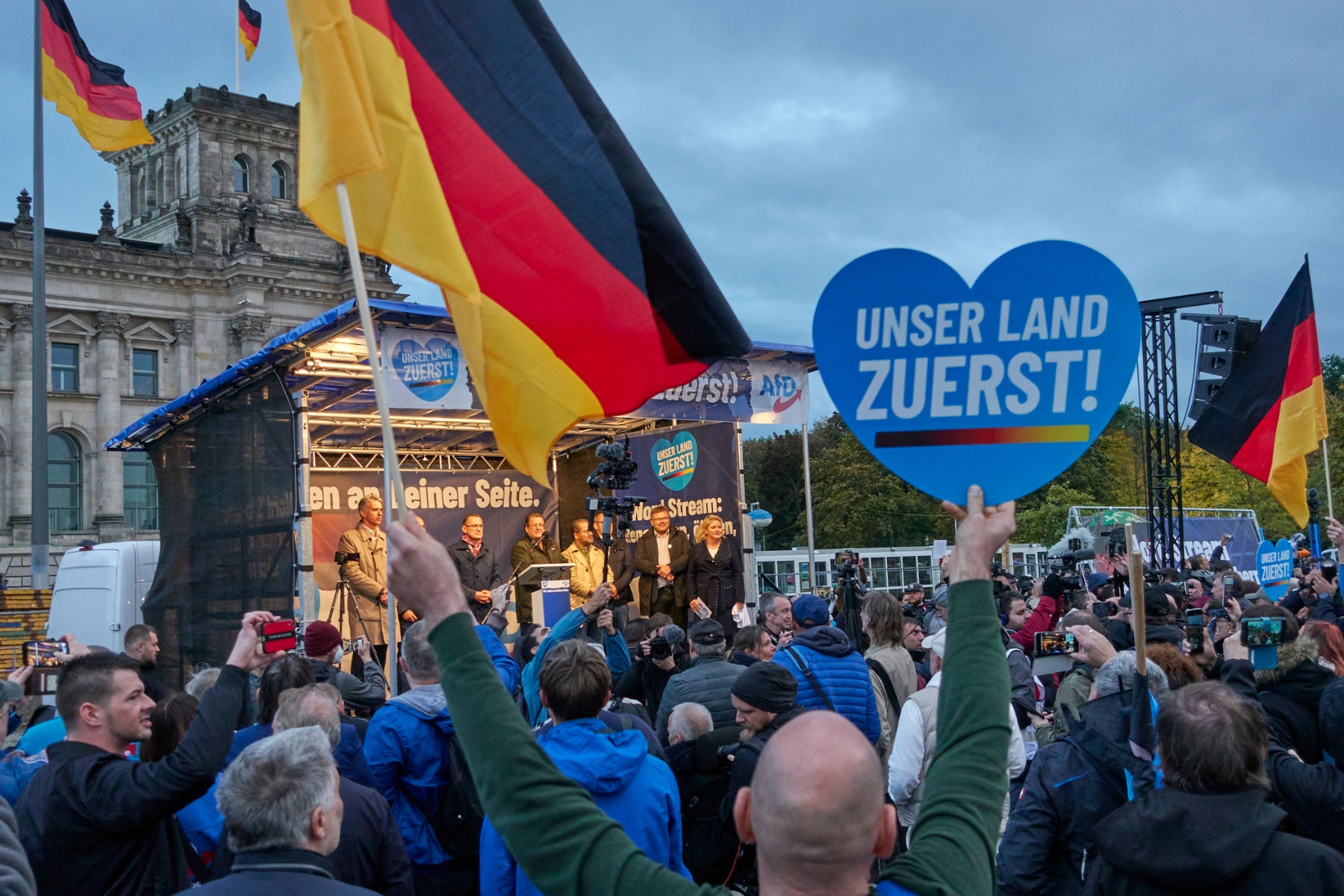
The consequences are no longer abstract. Communities are bled dry, industrial areas are devastated, and the middle class is worried. Political anger is swelling. In North Rhine-Westphalia, a historical stronghold of the CDU, the AfD is polling above 25 percent. In the East, it is dominant. Among young urban voters, radicalism is shifting to the left.
Not an accident, because deindustrialization destroys more than just jobs. It shatters the German social contract, founded on stability, competence, and shared prosperity. The elites pave the way for anti-establishment forces by claiming that “pain is necessary” in the name of abstract goals. A union that promises prosperity while delivering degrowth cannot retain the loyalty of its people. By weakening its engine, the European Union may be irreparably undermining its own project.
Breaking free from blindness
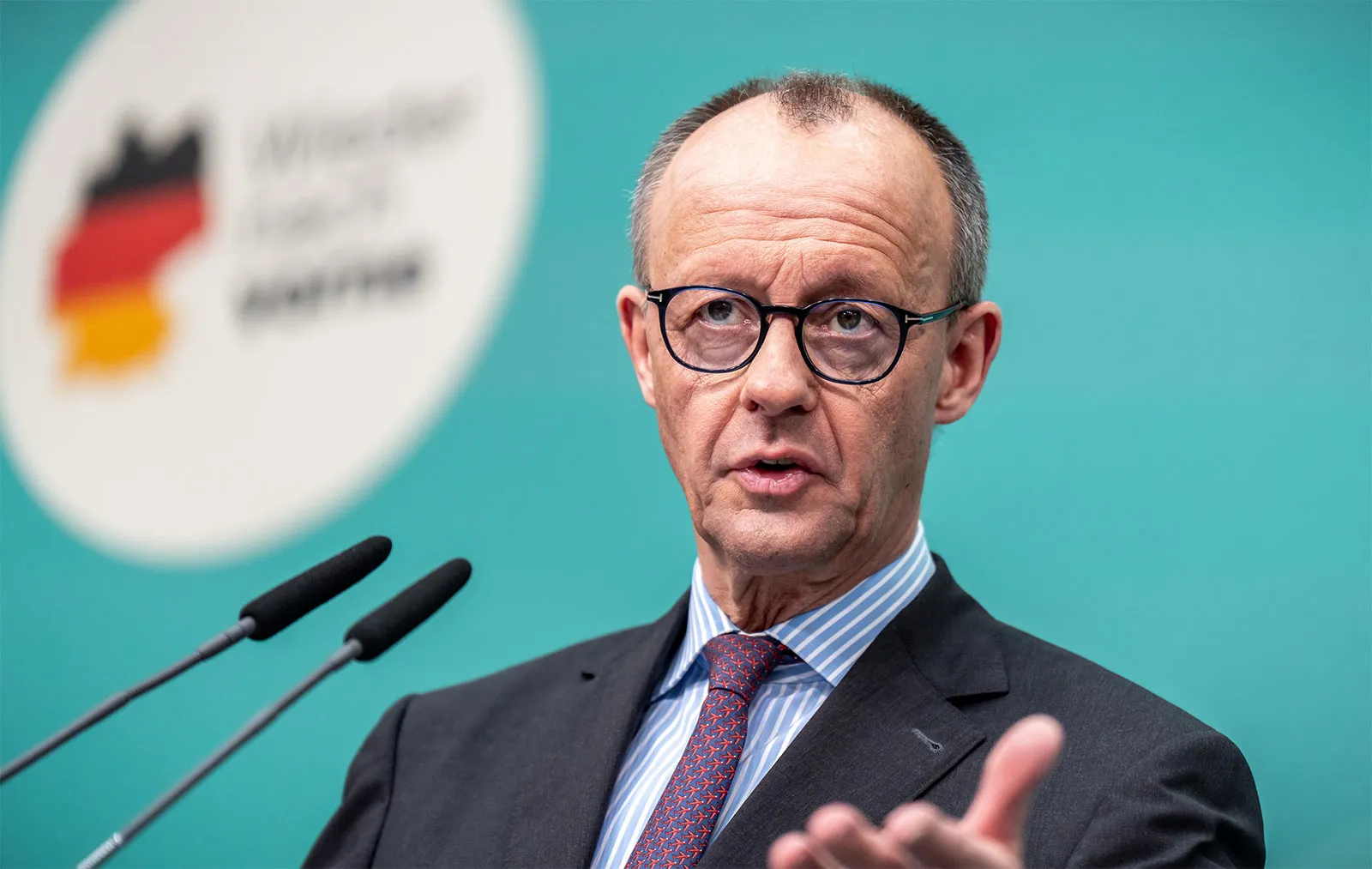
At the end of 2025, Chancellor Friedrich Merz launched an investment plan of up to EUR 500 billion to “save industry.” A just and laudable intention. Alas, this plan runs up against the very architecture of Europe. Without a lasting relaxation of budgetary rules — a golden rule for investment, partial pooling of resources, and an increased role for the European Investment Bank — everything will remain merely symbolic. Europe knows how to mobilize hundreds of billions to stabilize the financial sector, but hesitates to do so to save its productive base.
Three breaks are necessary.
Energy pragmatism. Not to abandon climate action, but to prioritize over time. Securing abundant and cheap energy sources – including nuclear – in order to preserve the productive capacity during the transition.
Strategic de-escalation. Not to capitulate to Moscow or abandon Ukraine, but to recognize that you can’t wage a protracted war by sabotaging your own energy base. Self-sufficiency isn’t morality; it’s the material condition for it. Morality doesn’t produce kilowatt-hours.
Debureaucratization. Not to dissolve the Union, but to restore primacy over regulations to politics, and to replace regulatory dogma with a genuine industrial policy.
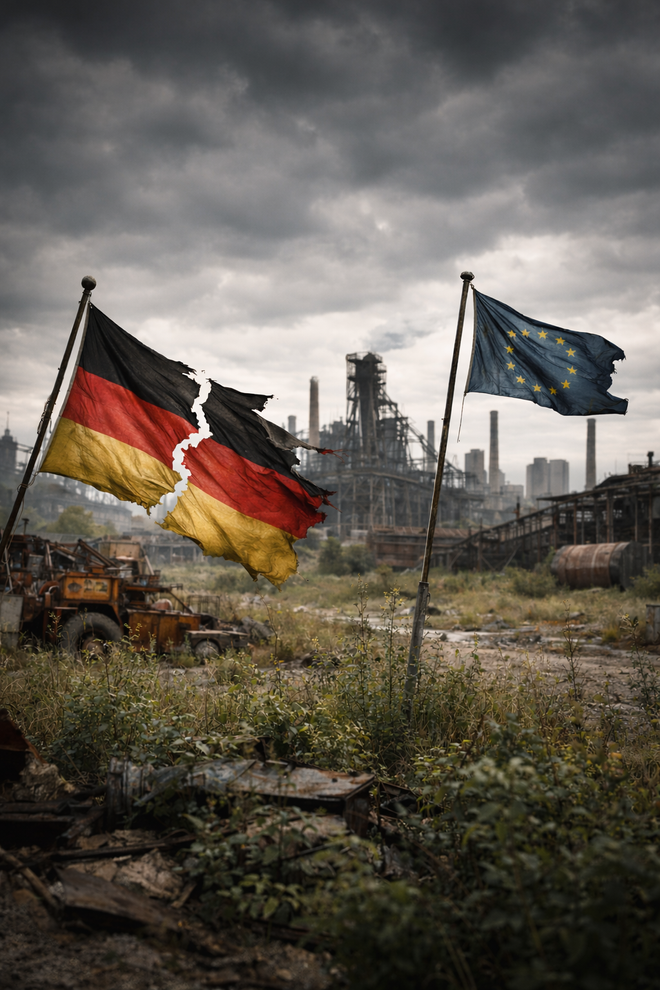
The European illusion doesn’t end with Russian energy. It extends to a growing dependence on China for rare earth elements, permanent magnets, and components for batteries and wind turbines. Europe claims to be achieving geopolitical emancipation while entrusting Beijing with the very heart of its green transition, but it is simply replacing one vulnerability with another and confusing strategic strength with genuine fragility.
Germany is not testing Europe’s patience: it is revealing its strategic bankruptcy. A union that sacrifices its industrial heartland on the altar of moral posturing and poorly managed geopolitical calculations condemns itself to impotence.
The German collapse is not inevitable, but the product of political choices.
This article was first seen on michelsanti.fr.
For more on the author, Michel Santi and his exclusive opinion pieces visit his website here: michelsanti.fr
For more on the latest in business and finance reads, click here.
The post Opinion: A Broken Germany — Europe Confronts Its Economic Suicide appeared first on LUXUO.