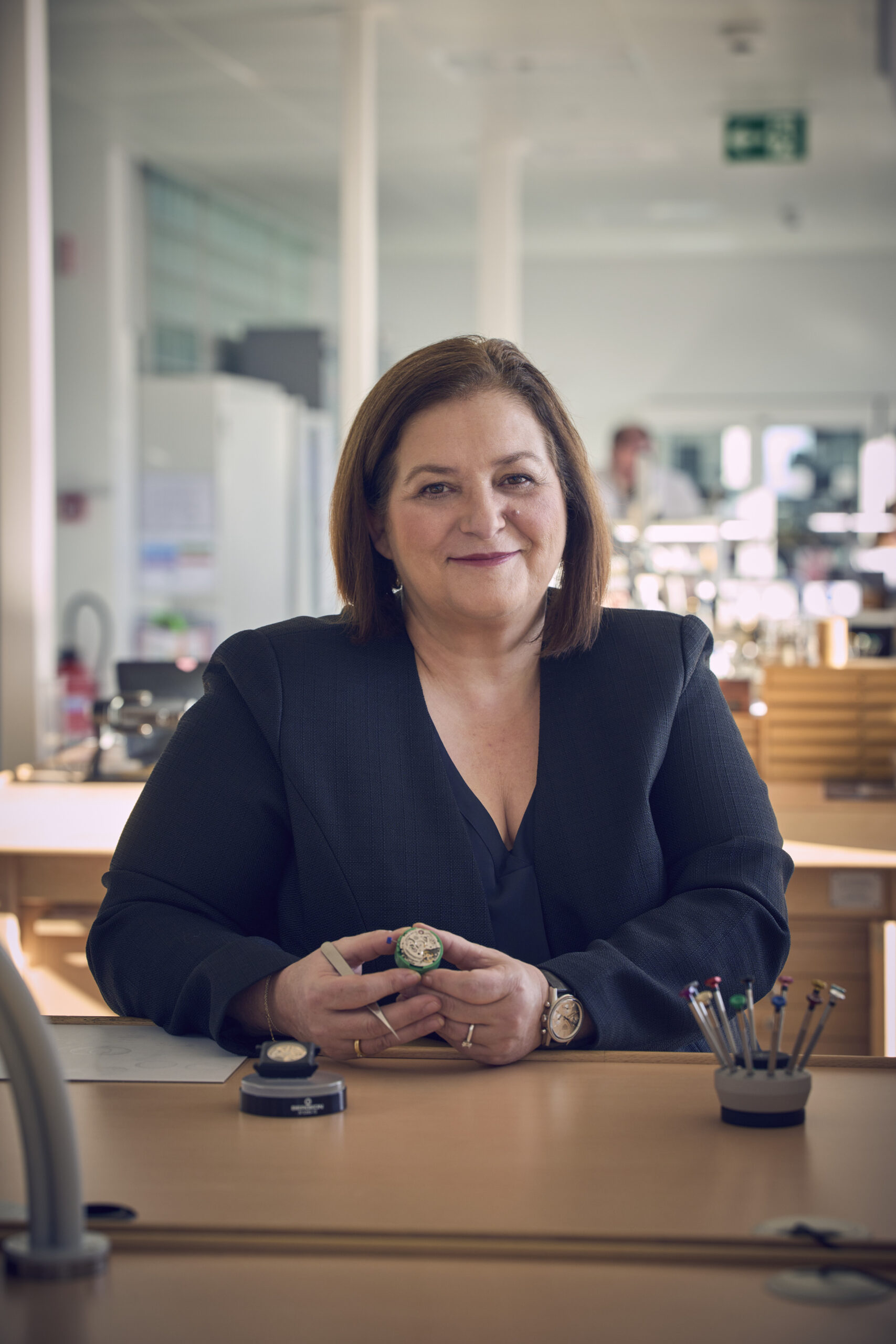
Carole Forestier-Kasapi on Strategic Direction and the Future of TAG Heuer Movements
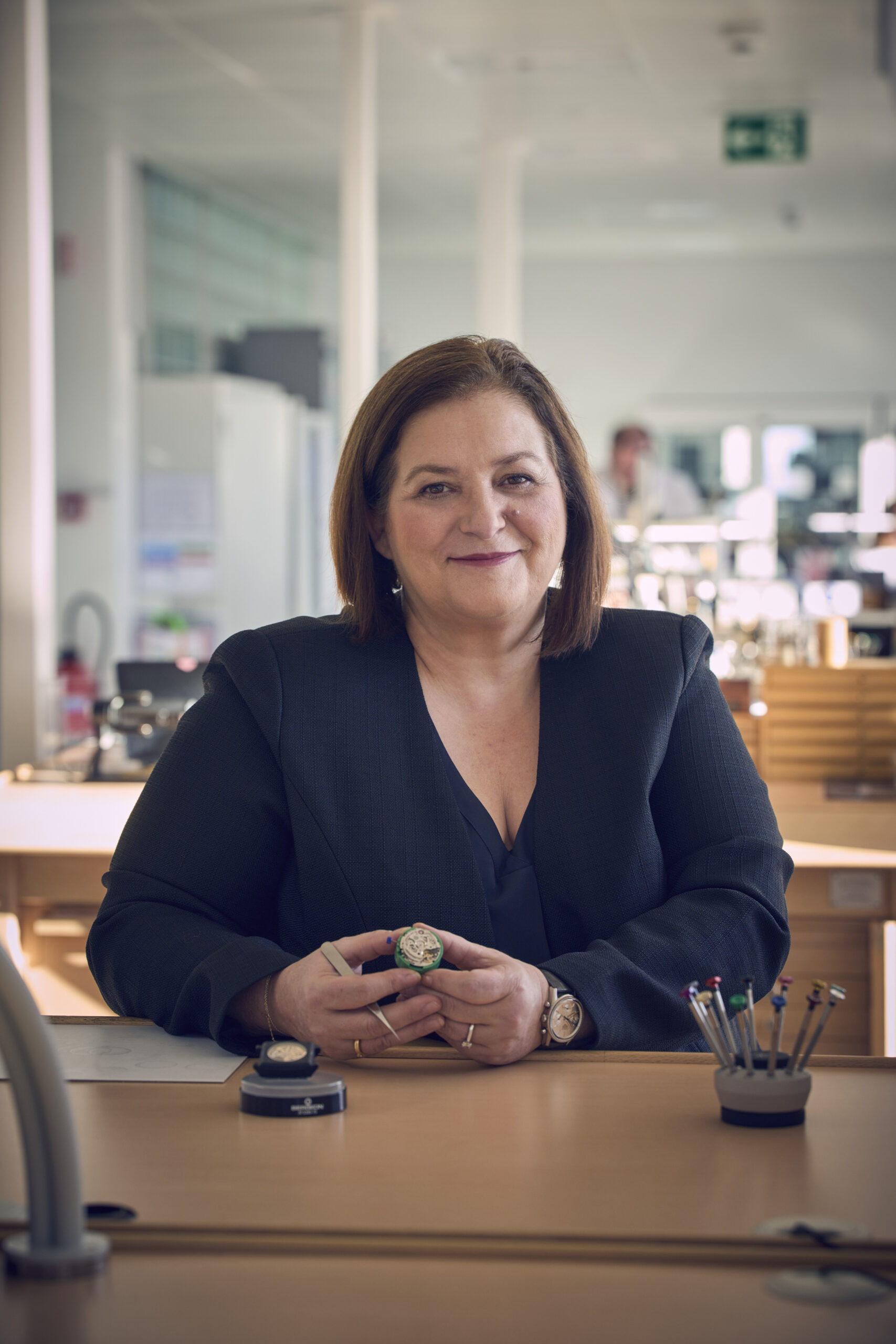
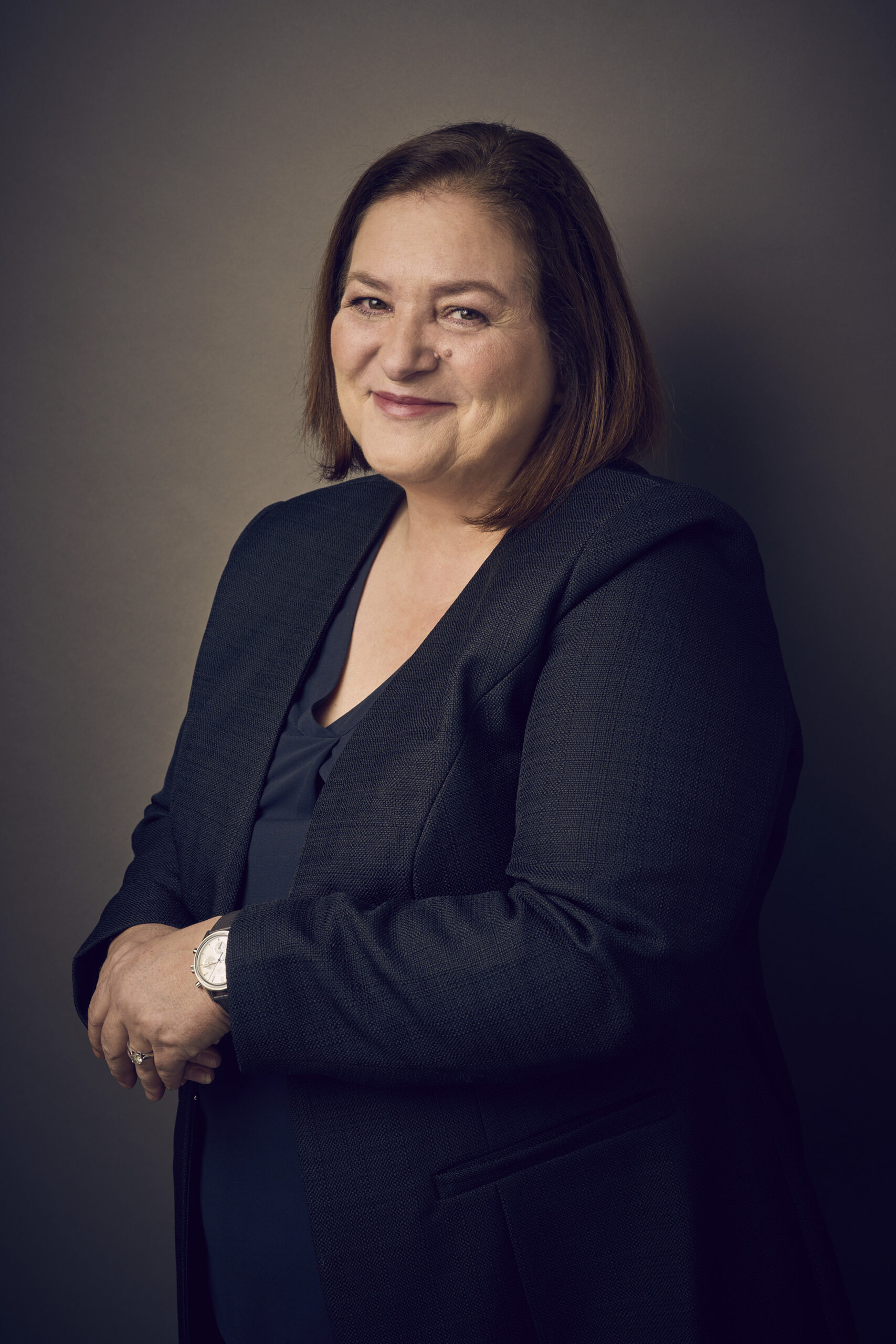
Carole Forestier-Kasapi does not get emotional about watchmaking; she favours the engineering side of her background when it comes to her role as TAG Heuer Movements Director. This might surprise those who know Forestier- Kasapi by her Queen of Complications sobriquet and her family background. Born in Paris into a family of watchmakers, she spent more than three decades shaping the industry’s mechanics.
Her career began with a meteoric rise, highlighted by her 1997 Breguet Foundation Prize win for a central carousel tourbillon concept that would eventually birth the legendary Ulysse Nardin Freak. She later spent 15 years as the Director of Movement Creation at Cartier, where she oversaw the development of nearly 30 in-house calibres and revolutionary concepts such as the ID One and ID Two.
Since joining TAG Heuer as Movements Director in 2020, Forestier-Kasapi has pivoted from pure watchmaking complexity to a strategy focused on industrial resilience and performance. Her tenure has been defined by a “fix the basics” philosophy – improving reliability and precision – while simultaneously pushing the boundaries of material science.
Somehow, we have missed speaking extensively with Forestier-Kasapi since her Cartier days, but we finally corrected that problem in 2025. It is particularly apt given the debut of the TH-Carbonspring at Geneva Watch Days this year. We do like to geek out on escapement technology but fortunately for all, Kasapi-Forestier stays level-headed and also gets into the Solargraph and the realities of industrial production.
You championed the idea of surprise in watchmaking, and the importance of that surprise for the client when they see and feel a watch for the first time. What is the value of a surprise like this?
To the eyes of our clients, it is a question regarding the expression of desirability. First, of course, I think that is the key element. You will never buy a watch if it is not desirable in your eyes.
If the expression (of the watch) connects to something you want to achieve, and it speaks for itself, it is a win-win situation. You don’t need to explain it; it is a self-explanatory design.
If you look at the history of the Maison, watches were always… not just a new way to innovate, but innovating with sense (or purpose) behind it. I think it is very important. It is not just innovation for innovation.
Right. The idea of this “surprise” occurred to me not only because of the Split-Seconds Chronograph, but also because of things like the Plasma Diamant case. You think: “What is this? Why are you doing this? What is the plan?”
It’s not just developing a movement; it is really a succession of impacts serving a strategy – a movement strategy that makes sense for the Maison.
The most important thing for me at the beginning, when I joined TAG Heuer, was to put a long-term strategy on the table. A movement strategy for the Maison: What do we want to achieve? Where do we see TAG Heuer in the future?
Once you have a clear long-term movement strategy, you can develop and accomplish your roadmap.
On that note, when you look at the assortment, you have a variety of things. You have in-house movements developed, where the priorities seem to be reliability and good power reserve. But then there are other elements, including partner or supplier movements.
Yes, because they (the suppliers and partners) are serving the main strategy. Independently from where the movements are coming from, the most important thing is: Are they serving the strategy or not? It’s not a question of the supplier.
We don’t want to become 100 percent in-house; this is not our strategy. The movement strategy is about more durability and more quality. The orientations are there (as you said).
For example, with solar movements, we want more durability. We want to switch totally from quartz watches with regular battery movements to solar movements <referring here to the Solargraph> to achieve more than 10 years (of autonomy). Everything is connected to the strategy.
Why Kenissi movements? It is the same: more durability, more qualitative movements. Same with [Vaucher]. Today, [Vaucher] is the best high-end movement supplier in Switzerland, delivering very high-qualitative movements.
To be clear, TAG Heuer currently has normal quartz, and you have solar… You prefer to actually have everything be solar in the future?
Yes, because it makes sense for the client. More durability – you don’t need to change your battery every two or three years. Here we have an accumulator in place of a battery, and the life of this accumulator is more than 15 years. Imagine how convenient it is for the client. That is really what we want to target: more durability and quality with these new movements. We believe solar is the smart solution for the client – very smart.
In terms of innovation, how do you decide where to put your efforts?
Because we are focused on durability and quality (and there’s a lot within quality)… Inside, or within quality, what we want to achieve is more performance. So, more precision, more accuracy, more power reserve. We want to tackle “weekend-proof” power reserve for all mechanical movements.
It is really a client-centric topic. I think today that is the most important thing for a luxury brand to achieve first. After that, we can play with complications… but the basics must be fundamentally very strong.
Take us through some of these basics, please!
In fact, it is easy. We looked at the most important reasons why watches come back to the manufacture for servicing when there is trouble (or problems with the running of any given watch). We analysed and classified these kinds of troubles. One of the most important ones is related to magnetism.
For mechanical watches, magnetism implies you need to find a solution regarding the escapement – an amagnetic (also known as antimagnetic) solution – and the same for the balance spring or hairspring.
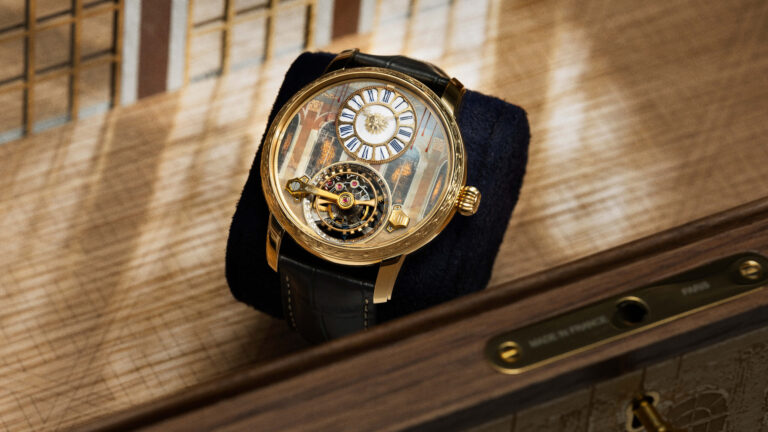
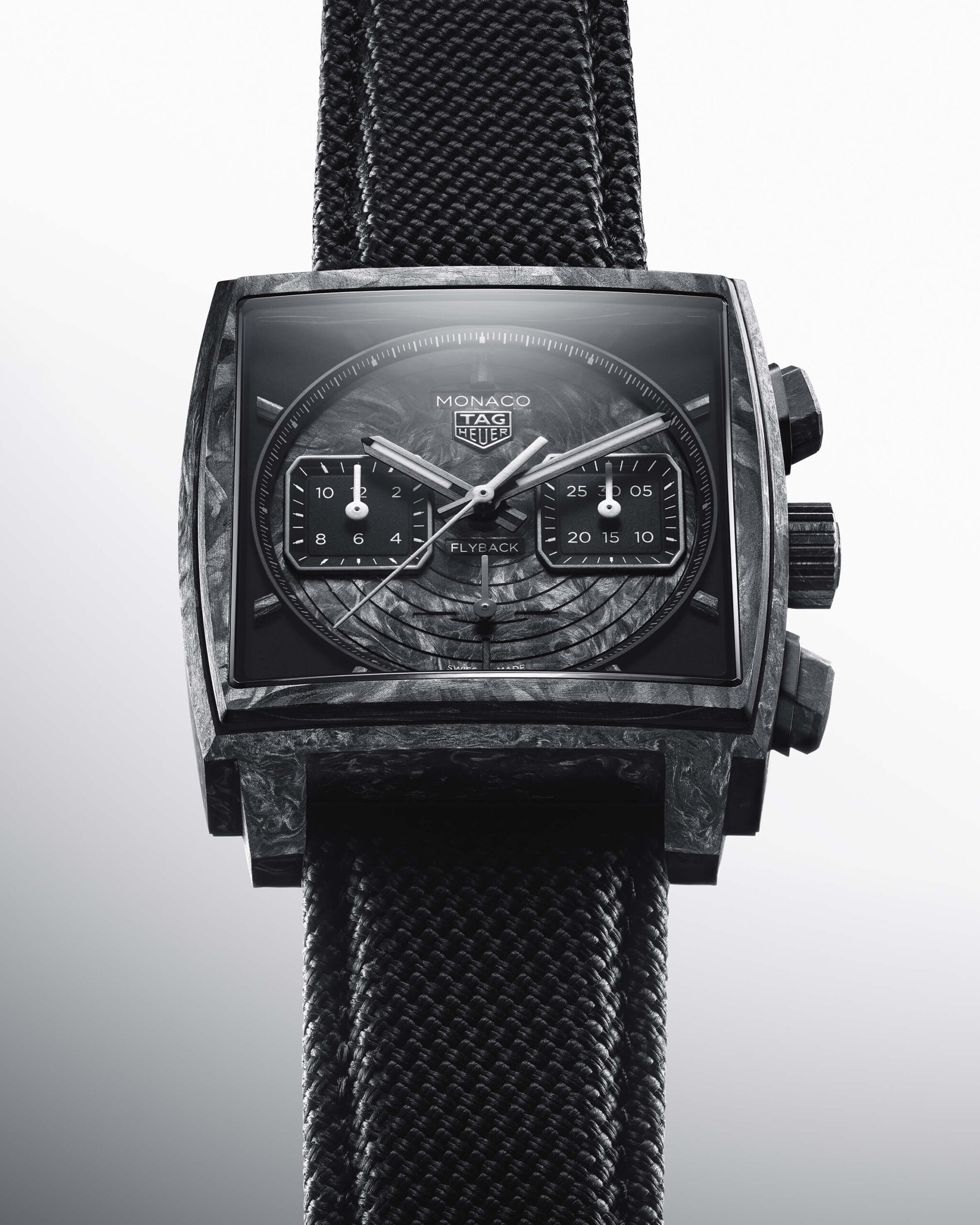
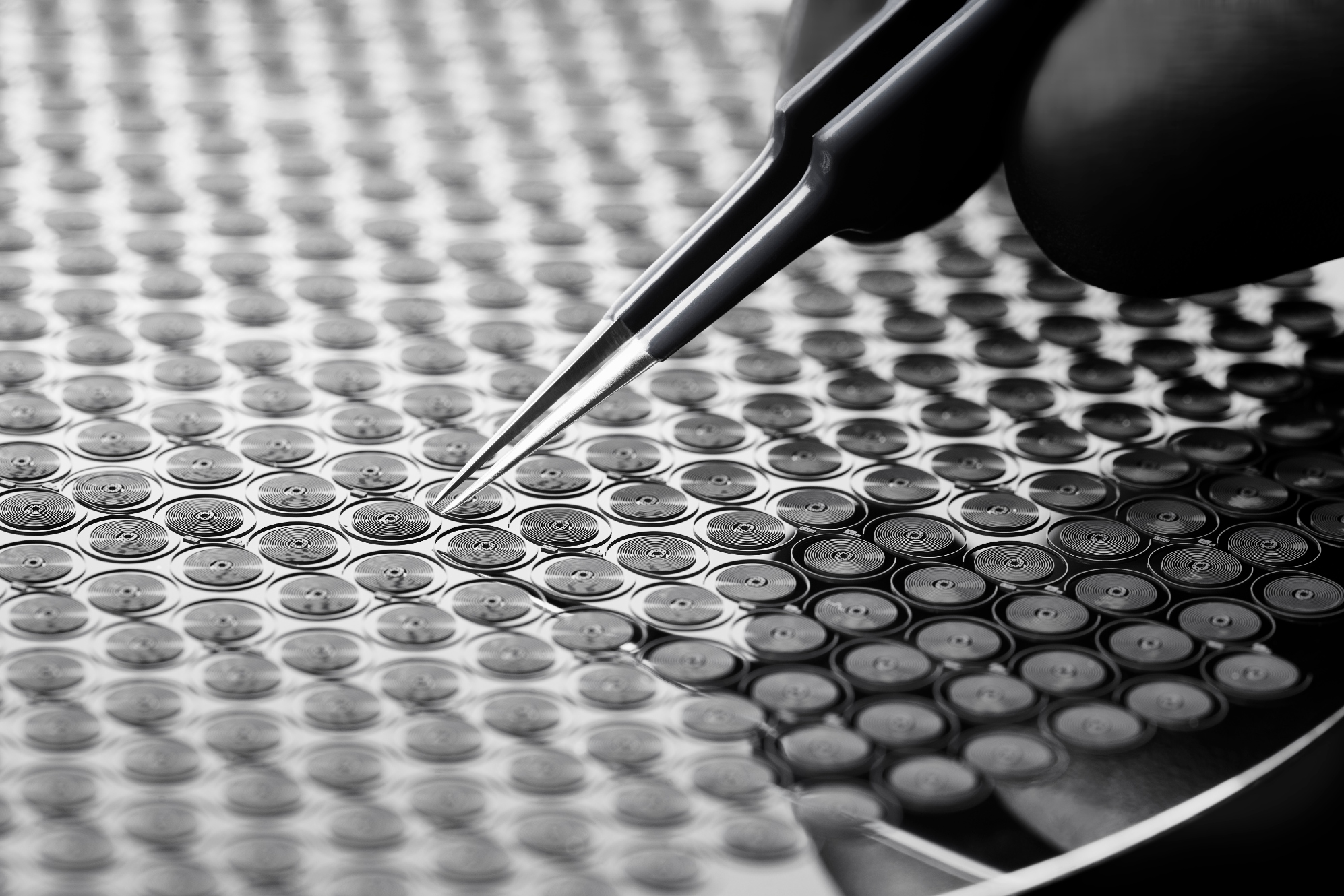
So, on the subject of innovation, at TAG Heuer, we had already developed and invented this Carbon Hairspring (called the TH-Carbonspring). It takes time to finalize this level of innovation (TAG Heuer announced a production version of this hairspring in 2019, which ultimately did not happen). We worked very hard on it, and we are happy today. We present during Geneva Watch Days the very first solution with two new Carbon Hairsprings: inside the TH20- 60 chronograph calibre and the TH20-61 tourbillon chronograph calibre.
Finally, we have the mental strength at TAG Heuer to finalise this high level of innovation. This is the most complicated thing you have to monitor when you are a watchmaker – doing something regarding the material of the hairspring.
Mental strength indeed, because it took 10 years?
Yes, it took 10 years. And now we will extend this material and this hairspring everywhere in the Haute Horlogerie collection because the production is small (in terms of how many are being made, or planned). The price is high due to the production size, so we will have this first step only in Haute Horlogerie pieces. So, the Haute Horlogerie pieces, like the novelties of next year, will be equipped with the TH-Carbonspring (in the balance assembly).
It is a nice solution to present this year during Geneva Watch Days because, I don’t know if you know, but this year is an extraordinary anniversary. It is 350 years since the invention of the hairspring.
Oh yes, the original developed independently by both Christiaan Huygens and Robert Hooke?
Exactly. We are lucky to be able to celebrate this year (with the TH-Carbonspring).
It is often very exciting for people like us in watch magazines because the hairspring is the heart of the mechanical watch. But at the same time, we have to acknowledge that it is very difficult to market a watch based on the idea that there is an interesting hairspring.
For me, the topic is to solve the magnetism problem. That’s it.
In terms of overall strategy, we heard this year about plans for the different brands within LVMH watchmaking to leverage their respective strengths to benefit each other. How does this impact the broader strategy for movements at TAG Heuer, since you have the largest volume?
So, we are sharing some elements. All the Maisons have their own strategy. We don’t share the strategy, product plans, or development plans. But of course, if it makes sense to share something – if there is no added value to do two different things at the same moment – of course, we can share. It is just a question of doing the smarter thing.
What is cool in this group is the fact that we have the freedom to share, or to decide not to share. This is the most important. Our group is a group of entrepreneurs.
We recently published our interview with CEO Antoine Pin, and he was talking about the importance of moments, as he did during his keynote in Geneva. Precision is important on a fundamental level, but it is also an emotional thing. How does that feeling inform your perspective on watchmaking?
Every moment is important. Sometimes it is destiny, you know? More than just a moment of deciding. It is also a chance to be opportunistic. Sometimes you have to be opportunistic, and sometimes no. It depends on what kind of thing it is – if it is work or personal. Myself, I consider I am on the side of the engineer, as far as work goes. So, I am not very emotional on the work side. I am more emotional for my lifestyle. You have to separate the things; I don’t like to mix emotion in my work. Otherwise, decisions taken are not correct in the end. When you look back at your old decisions… when it is emotional… (it doesn’t work).
This story was first seen as part of the WOW #82 Festive 2025 Issue
For more on the latest in leaders and luxury watch reads, click here.
The post Carole Forestier-Kasapi on Strategic Direction and the Future of TAG Heuer Movements appeared first on LUXUO.