Bill Barry-Cotter: How Australia Launched Unique Boating Brands
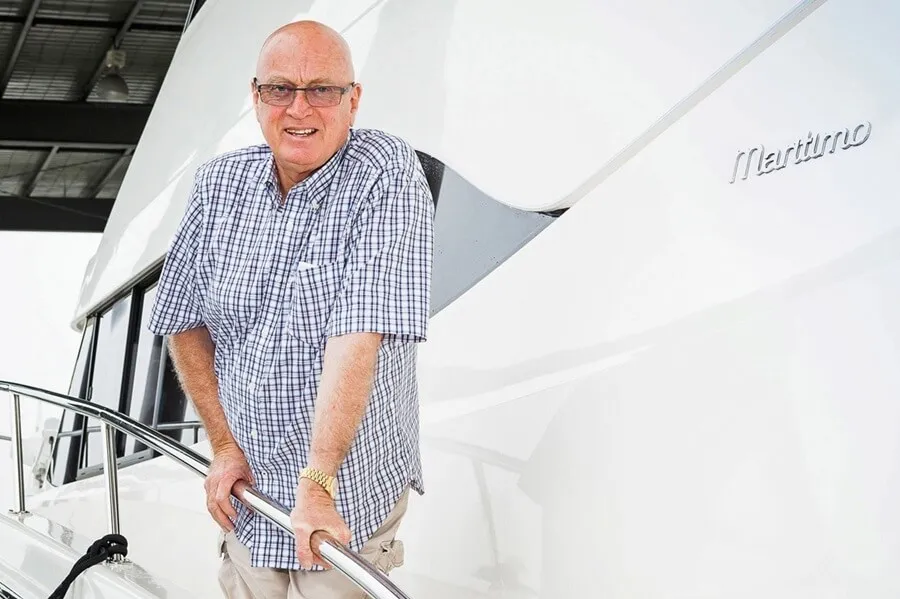
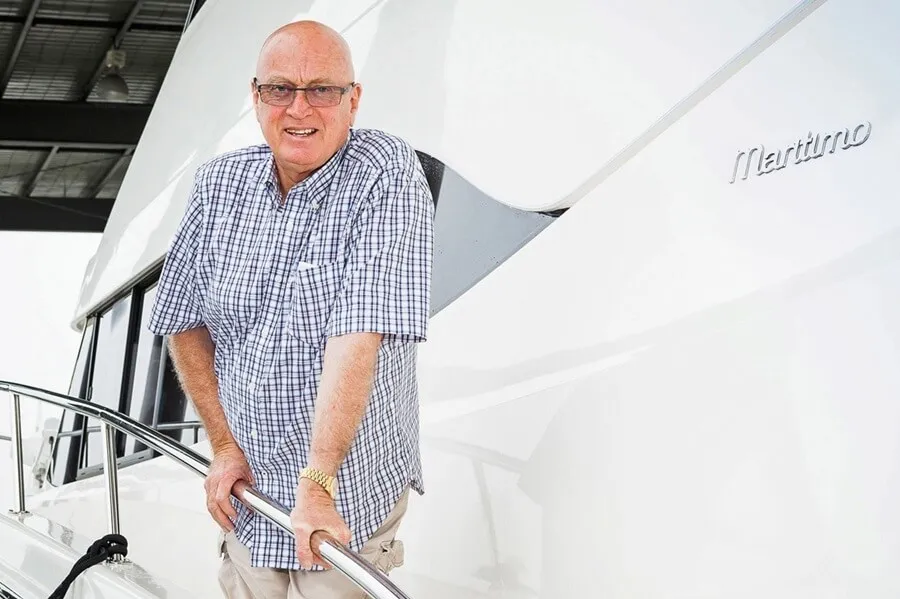
Now in your 80s, you developed famous Australian boating brands like Mariner, Riviera, Maritimo and lately purchased Caribbean. Your journey began as a teenager, sailing dinghies in Sydney’s northern Pittwater region?
My journey began with a foundation from my parents – a farmer and a schoolteacher – in the small town of Adelong, New South Wales. But it was a sailing trip on Sydney’s northern Pittwater as a teenager that sparked a passion for the water and working with my hands. That passion led me to a boat-building apprenticeship at 16. By 19, I’d already built my own boat. The fire was lit for what would become my life’s work.
What led you to start building boats called Mariners at Garden Street in Narrabeen, then in nearby Mona Vale?
In 1966, at just 21, my employer, Cedric Williams Snr, retired and gifted me the jigs, patterns and tools for the boats that we had been building. I took that opportunity and launched Mariner Cruisers. We built both motorboats and sailing yachts. By 1978, Mariner was Australia’s largest big boat manufacturer.
I sold the business to an Australian public company that year, but I stayed on for a year, which proved to be a challenging period. When I left, I stated my intention to buy it back for a nominal sum. Ten years later, when the company went into liquidation, I did just that.
These were both motor boats and sailing yachts, initially with wooden hulls, before fibreglass made its debut?
Yes, that’s right. In the early days, wooden hulls were the standard, but fibreglass emerged in the late 1940s and became more popular in the 1960s. Fibreglass was a game changer. More durable and resistant to common issues found in wood, like rot, warping and marine organisms, fibreglass made it much easier for owners to maintain their watercraft. It also allowed us to create more complex and streamlined hull shapes, resulting in faster and more fuel-efficient boats.
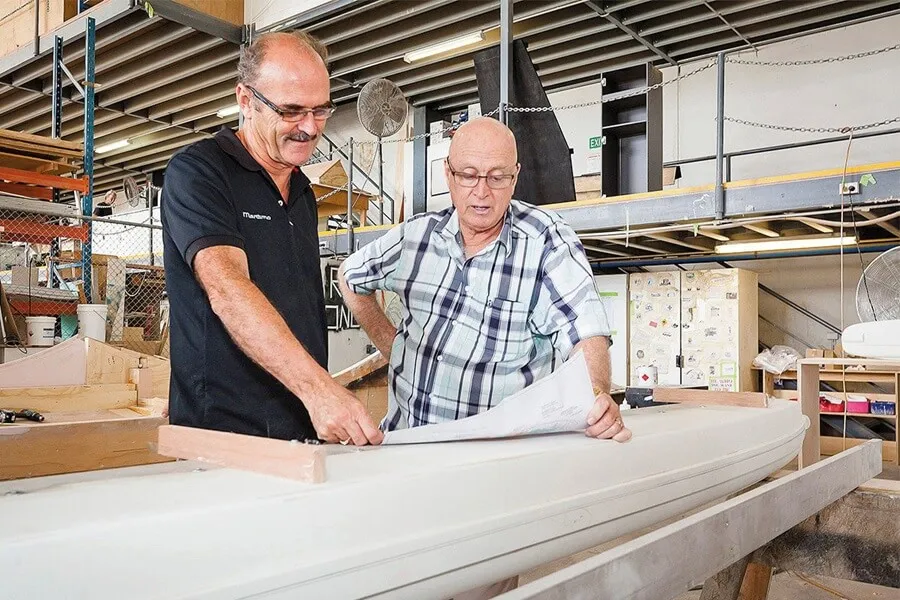
The Australian ‘Mariner’ brand I founded is separate from the American O’Day ‘Mariner’ brand, which also had its own transition to fibreglass. We made the strategic decision to adopt fibreglass to build robust and enduring boats that focused on durability and performance. This is a philosophy I still hold today.
Did you sell boats built abroad as well? Singapore-based Grand Banks CEO Bob Livingston later asked you to become a director of that successful company, but you declined?
Yes, I built Grand Banks under licence in Australia, and I also worked with them as a consultant for many years, developing new models and contributing to the engineering side. It was a valuable experience, but ultimately my passion has always been in building and steering my own brands, which is why I chose not to take on a directorial role.
What was your plan in moving to the Gold Coast, now an epicentre of production boat building in Australia, and founding Riviera Yachts? How many boats a year did the yard turn out during this period?
When I left Mariner, I wanted to create a new brand that would define the market. Australia’s Gold Coast was a developing area with huge potential, but not the epicentre of boat building it is today. It was a developing area, and I saw an opportunity to get in on the ground floor. I founded Riviera with just five employees in 1981, and we built eight boats that first year. The move was a strategic decision to create a culture of excellence in a region that had the space and potential to grow into a major marine hub.
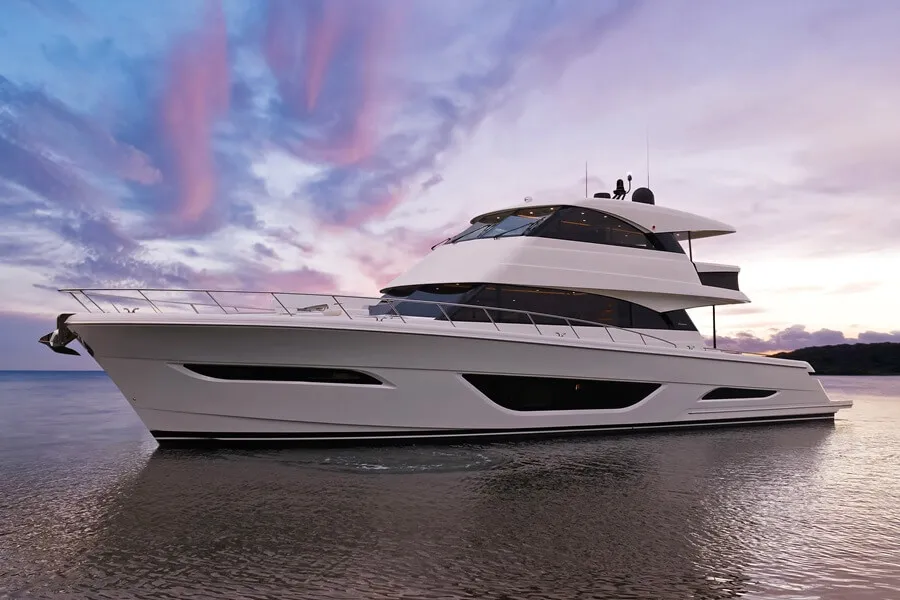
That same pioneering spirit later led me to establish Maritimo. I built on decades of experience to create a brand dedicated to long-range luxury motor yachts that embody performance, craftsmanship and innovation.
Your reported philosophy has always been to consult the owners, down to the smallest details, when designing new models. That has continued as a hallmark of Maritimo motor yachts?
Absolutely. At Maritimo, we call our design philosophy ‘Service Practicality’, and it remains central to everything we build. The idea isn’t just to make a boat easy for owners to fix; it’s about designing and engineering a boat so well that it rarely needs fixing in the first place. We focus on using proven materials, straightforward engineering and systems that are reliable and intuitive rather than having overly complex electronics or exotic build techniques.
This approach ensures longevity and confidence at sea while reflecting feedback we consistently hear from our owners. A key part of our process is to frequently consult with Maritimo owners so that we can refine our designs around real-world use, ensuring every yacht delivers the performance, comfort and dependability they expect.
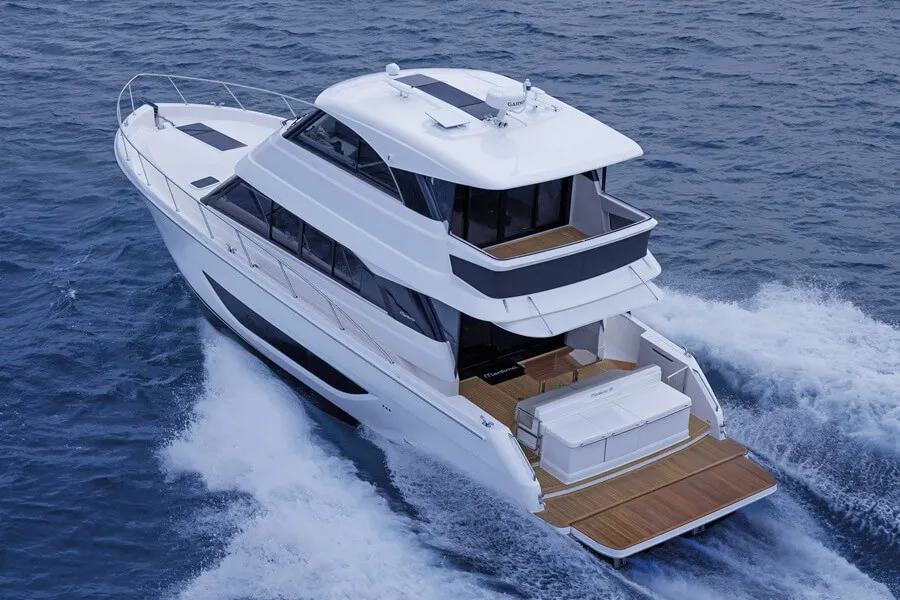
A principal difference is that Rivieras use pod drives, while Maritimos are shaft driven, which Maritimo says gives a distinct difference in offshore range and performance. Could you elaborate?
This is one of Maritimo’s defining characteristics. We are committed to shaft drives because they are simpler, more robust and proven. At their core they are just a rod and a propeller, which makes them incredibly reliable and easy to maintain anywhere in the world. For a bluewater offshore yacht, shaft drives provide low-end torque and the durability needed for long-range cruising in remote areas – qualities that cannot be compromised.
By designing around shaft drives, we ensure our boats achieve superior range, efficiency and dependability, giving owners complete confidence no matter where their journeys take them.
Asian sales agencies include Eins-a-Resort in Japan, and there have been recent Maritimo purchases in Southeast Asia. What are Maritimo’s most popular models in the region?
The interest in Maritimo yachts has grown quickly in Southeast Asia and Japan. The region has a strong appetite for Australian-made products, and our boats are engineered for real-world conditions that align perfectly with Asia’s cruising grounds. Every Maritimo is designed for bluewater capability: deeper hulls, robust shaft drives, precise weight distribution and efficient fuel systems that ensure confidence and comfort even on long passages.
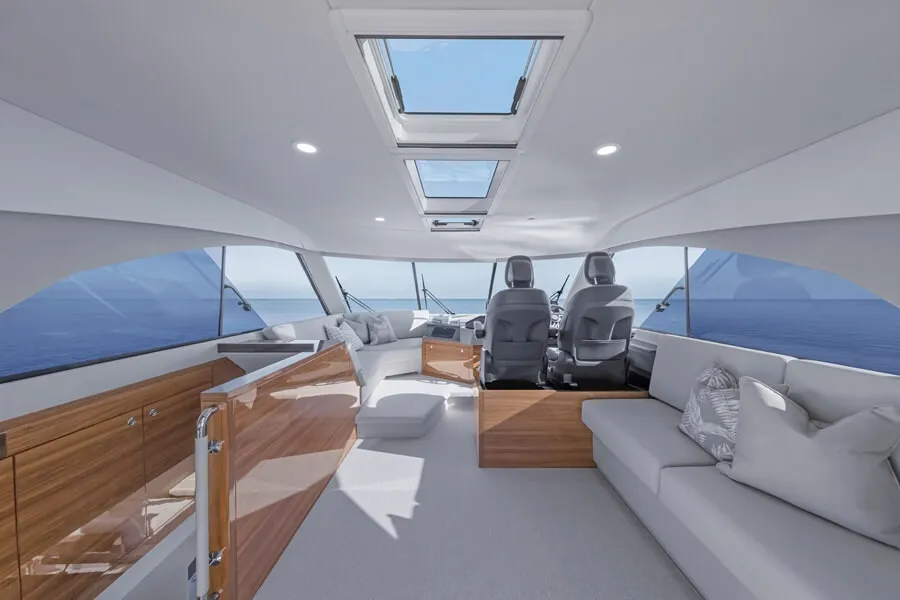
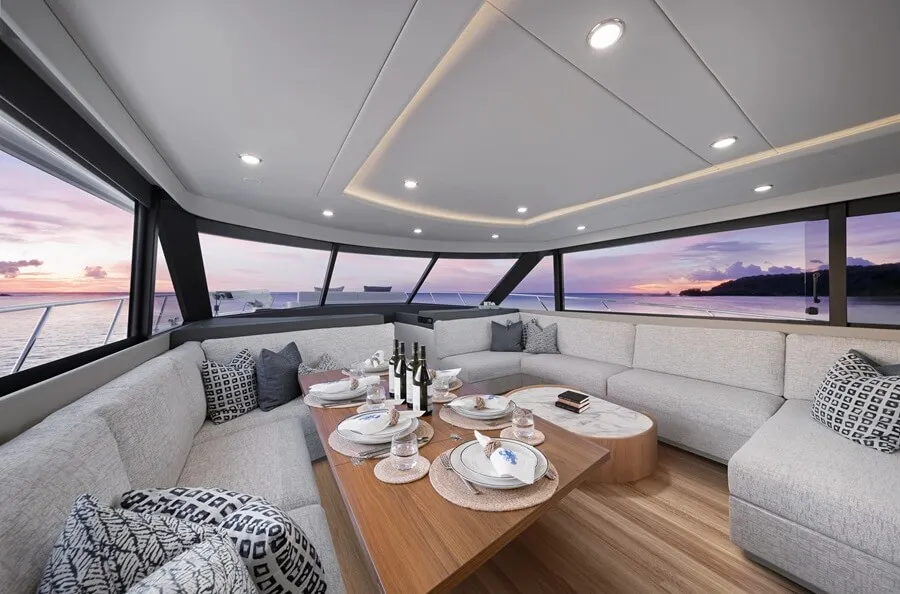
Features like our enclosed, air-conditioned flybridges are particularly appealing in tropical climates, offering comfort in heat or rain while still maintaining panoramic visibility. Models from our M-Series, such as the new M50, exemplify this balance, pairing powerful shaft-drive Volvo Penta engines and variable deadrise hulls with expansive living spaces that are ideal for family getaways or social cruising.
Looking ahead, how do you see Maritimo developing in future? What is the strategy of its executive board? Any personal thoughts here?
Our strategy is to continue our global expansion. While Australia, New Zealand and the Americas remain crucial markets, the next chapter of growth lies on the world stage. Southeast Asia, in particular, is emerging as one of the most exciting luxury yacht markets globally, with owners who value long-range cruising capability, reliability and refined comfort. Maritimo is exceptionally well-suited to meet these needs.
We will continue to build on our reputation for quality and bluewater engineering while strengthening our dealer network and customer relationships across Asia. Personally, I see enormous potential in this region because of the passion for exploration and the demand for yachts that can go further and do more. That alignment with Maritimo’s DNA makes Asia central to our future.
Maritimo has recently announced that it has purchased the Caribbean brand, which was at first billed, years ago, as American Bertrams being built under licence in Australia, then as an independent entity. This signals a specialised fishing boat coming into the fold, or a more hybrid cruising model?
The Caribbean brand is an Australian legacy, known for its strong and dependable vessels. It began by building Bertram hulls under license in the mid-1960s before becoming its own entity in the late 1980s. This acquisition is about combining Caribbean’s reputation for reliability with Maritimo’s modern engineering and offshore performance knowledge.
Our plan is not to blend the brands, but to offer a complementary product line. While Maritimo focuses on the upper end of the market with models from 50-75ft, Caribbean is known for its smaller, more accessible models. This move allows us to produce a more compact, hybrid-style fishing and cruising model efficiently, leveraging our existing factory and design expertise.
The new Caribbean will retain its traditional character but with elevated finishes and enhanced performance. It’s a strategic move to diversify our portfolio and honour a legendary Australian brand.
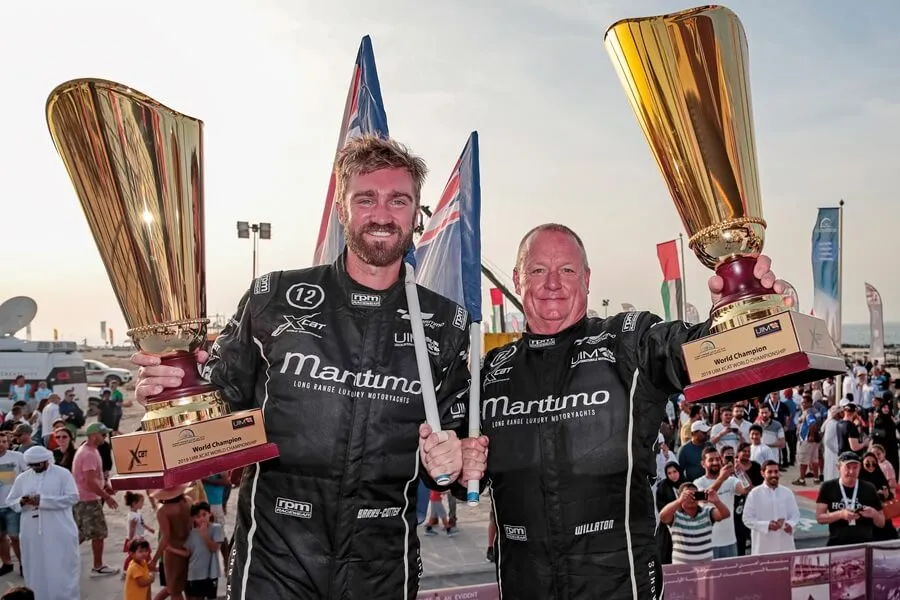
In related spheres, you have won 16 Australian Offshore Superboat Championships, and internationally son Tom and Ross Willaton beat the world’s best at the 2019 UIM XCAT Worlds in 2019?
Yes, my teams have won 16 Australian Offshore Superboat Championships. Powerboat racing has always been more than just a hobby for me; it’s a real-world research and development programme.
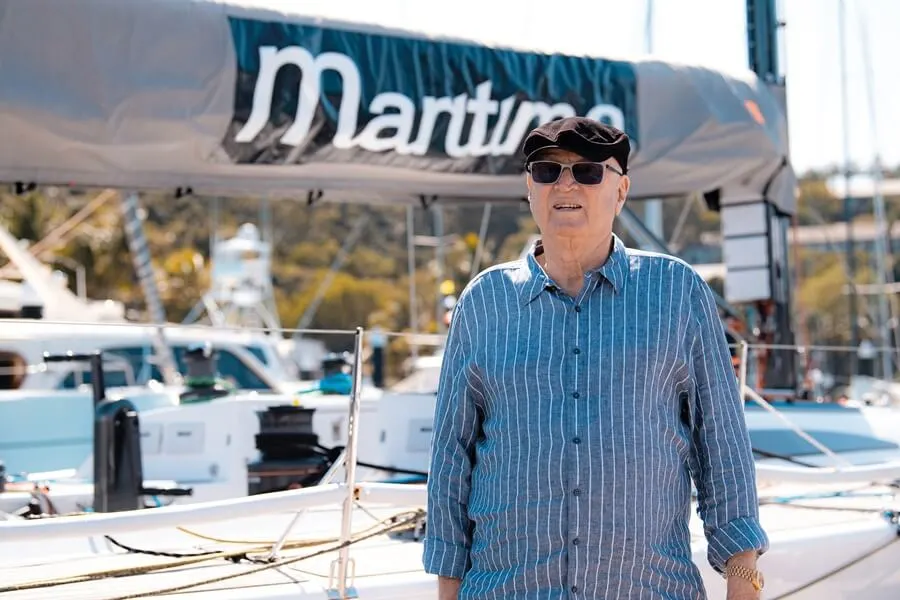
The brutal conditions of offshore racing are the ultimate test for our designs, driveline systems and hardware. It’s how we ensure that our innovations are pushed to their limits, resulting in more reliable and better-performing luxury motor yachts.
It was a very proud moment when my son Tom, along with Ross Willaton, won the 2019 UIM XCAT Worlds.
Sailing seems to run in your veins too. In the 79th Rolex Sydney-Hobart, you entered both the classic 32ft Maritimo Katwinchar and the Swan Maritimo 100. Will these campaigns continue?
Sailing is a lifelong passion that started when I was a boy. The Katwinchar, in particular, holds a special place in my heart. My father, Frank, owned her in the 1960s, and after years of searching, I found her in a dilapidated state on Gumtree. We spent two years restoring her, and it was a great joy when she won the Grand Veterans class in the 2019 Sydney-Hobart race. I also have a deep, personal history with the race, having won a divisional title in 1976 with Ghost, a boat I built myself.
As for the Maritimo 100, campaigns like these are about more than just racing. They are also a platform for real-world innovation. We test new ideas, layouts and hardware under demanding conditions, and the lessons feed directly back into our production boats. So yes, we’ll continue to support these campaigns as they represent both my personal love for sailing and Maritimo’s ongoing drive for improvement.
Finally, how would you summarise such a life?
My life can be summarised as a relentless pursuit of excellence, driven by an unwavering love for the sea and a deep commitment to my craft. My journey, from an apprentice to the founder of three of Australia’s most celebrated brands, has been defined by bold vision and unwavering commitment to perseverance – always moving forward, no matter the setbacks.
The founding of Maritimo, which was born out of loyalty to my team, is the ultimate testament to that belief. In the end, it’s not about the number of brands or the sales figures; it’s about a living legacy of integrity, innovation and a lifetime spent on the water.
This article was first seen on YACHT STYLE
For more on the latest in luxury yachting reads, click here.
The post Bill Barry-Cotter: How Australia Launched Unique Boating Brands appeared first on LUXUO.