A. Lange & Söhne Shifts Chronograph Watchmaking Into High Gear
A. Lange & Söhne brings Challenging Chronographs to ION Orchard, Singapore from 18 to 30 October, 10am – 9pm daily, pairing classic motoring heritage with live watchmaking craftsmanship.
Sign up for a guided tour and live demonstration here: https://tinyurl.com/challengingchronographs
The Concours of Elegance at Hampton Court Palace in London is at its most ravishing right before dusk. As the light turns amber, it casts the assembled fleet of 80 of the world’s rarest vintage cars, spanning the breadth of motoring history, in a soft, cinematic glow that teleports the besuited guests, champagne in one hand and mobile phone in the other, to another place and time.
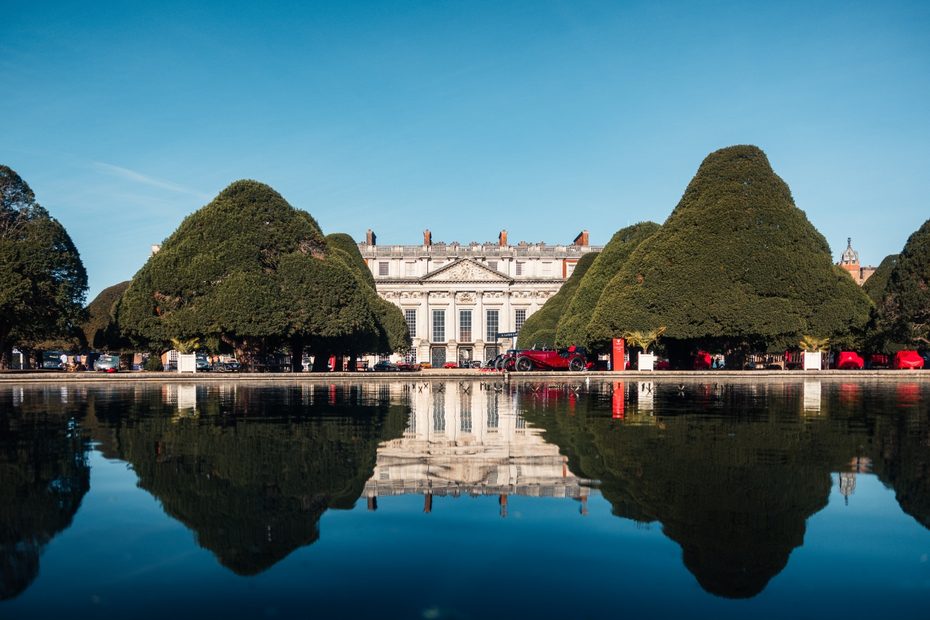
At the 2026 edition, held on the same grounds from 4 to 6 September, a deep burgundy-coloured racing machine stood out among an esteemed line-up. Harking back to what would have been a newfound seduction of speed from almost a century ago, it dominated the grounds with a commanding presence marked by imposing proportions and sweeping lines.
Unsurprisingly then, the 1928 Mercedes-Benz 710 SSK Rennwagen was voted this year’s ‘Best of Show’. The accolade was made sweeter because, as per Concours of Elegance tradition, the vote was cast by the owners of the competing cars themselves, not by a panel of judges.
The SSK’s provenance is the kind of thing that excites Wilhelm Schmid, CEO of A. Lange & Söhne. Delivered to Argentina, the car took second place on its debut at the 1929 500 Miles of Argentina. It won the Córdoba Grand Prix later that year and remained active in South American racing until 1958. The multi-sensory passion for motoring that the Concours of Elegance evokes likewise moves Schmid: He spent much of his career in the automotive industry before joining the German watchmaking house in 2011.
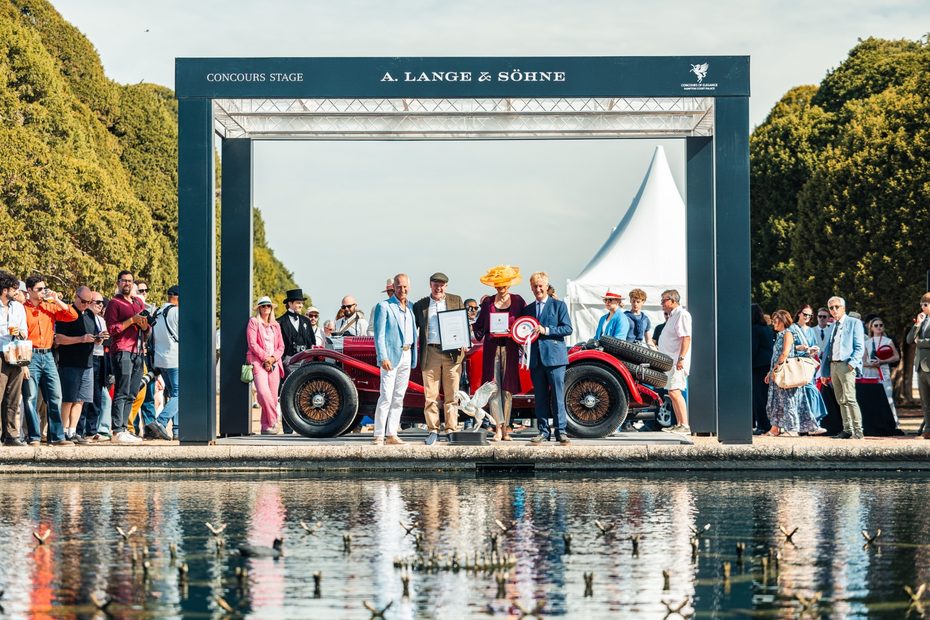
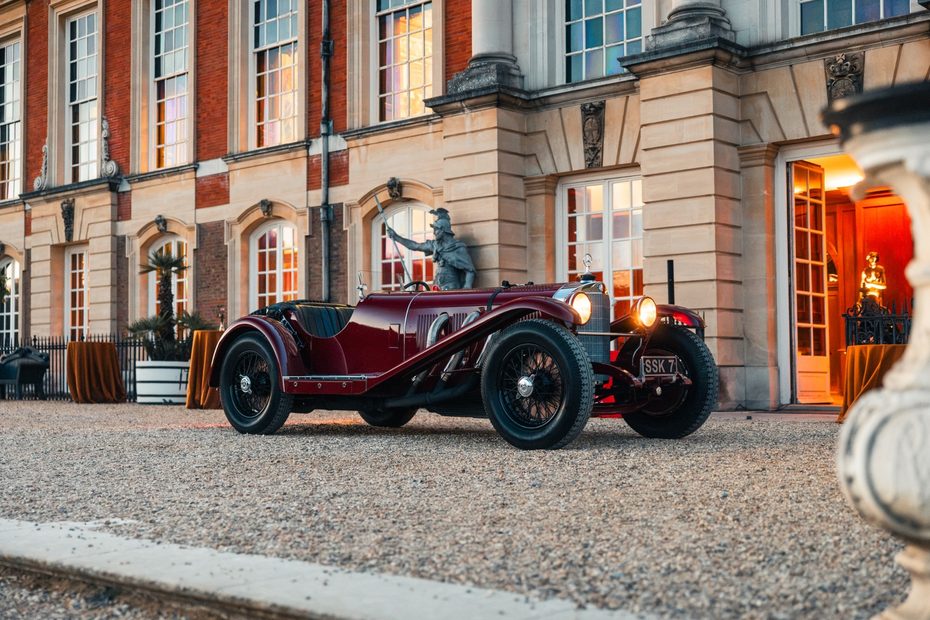
1928 Mercedes-Benz 710 SSK Rennwagen was awarded this year’s ‘Best of Show’ at Concours of Elegance 2026. Images courtesy of Concours of Elegance.
It is fair to assume Schmid was among the advocates for Lange’s partnership with the Concours of Elegance as its main presenting partner, a collaboration that stretches back to 2018. Besides Concours of Elegance, Lange partners with two other important classic car showcases: the Concorso d’Eleganza Villa d’Este, held annually in May on Lake Como in Italy, and the Audrain Newport Concours & Motor Week, staged at the coastal town of Newport, Rhode Island.
“Speaking from experience, I know that there is a great deal of common ground between car and watch collectors: ultimate craftsmanship, technical innovation and unrivalled heritage are the key values of both vintage cars and our approach to watchmaking,” said Schmid in a press statement. “My two passions in life are cars and watches, so the prospect of displaying our timepieces in this beautiful and historic space alongside the most amazing cars ever created is a dream come true.”
Triple Treat
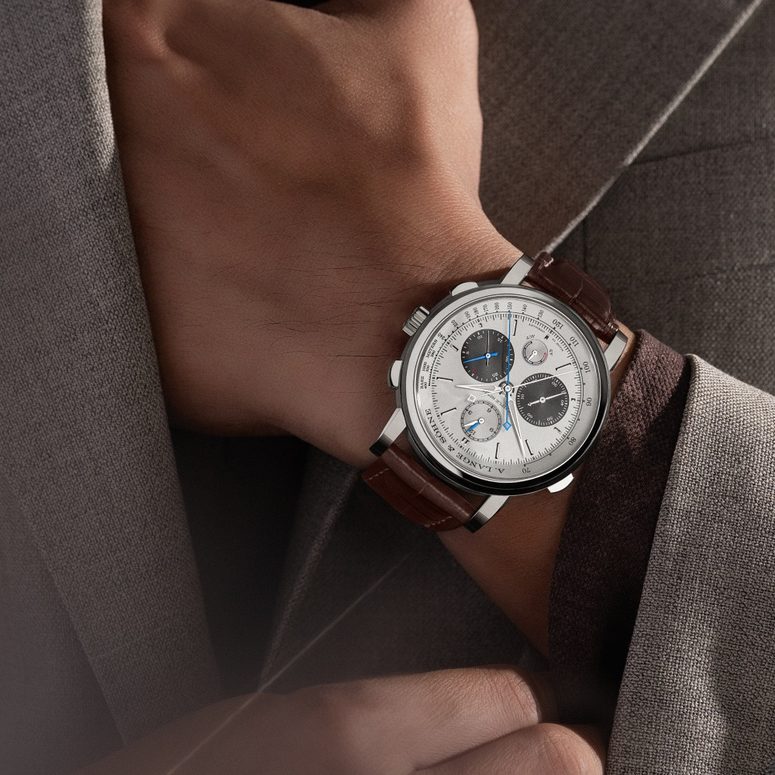
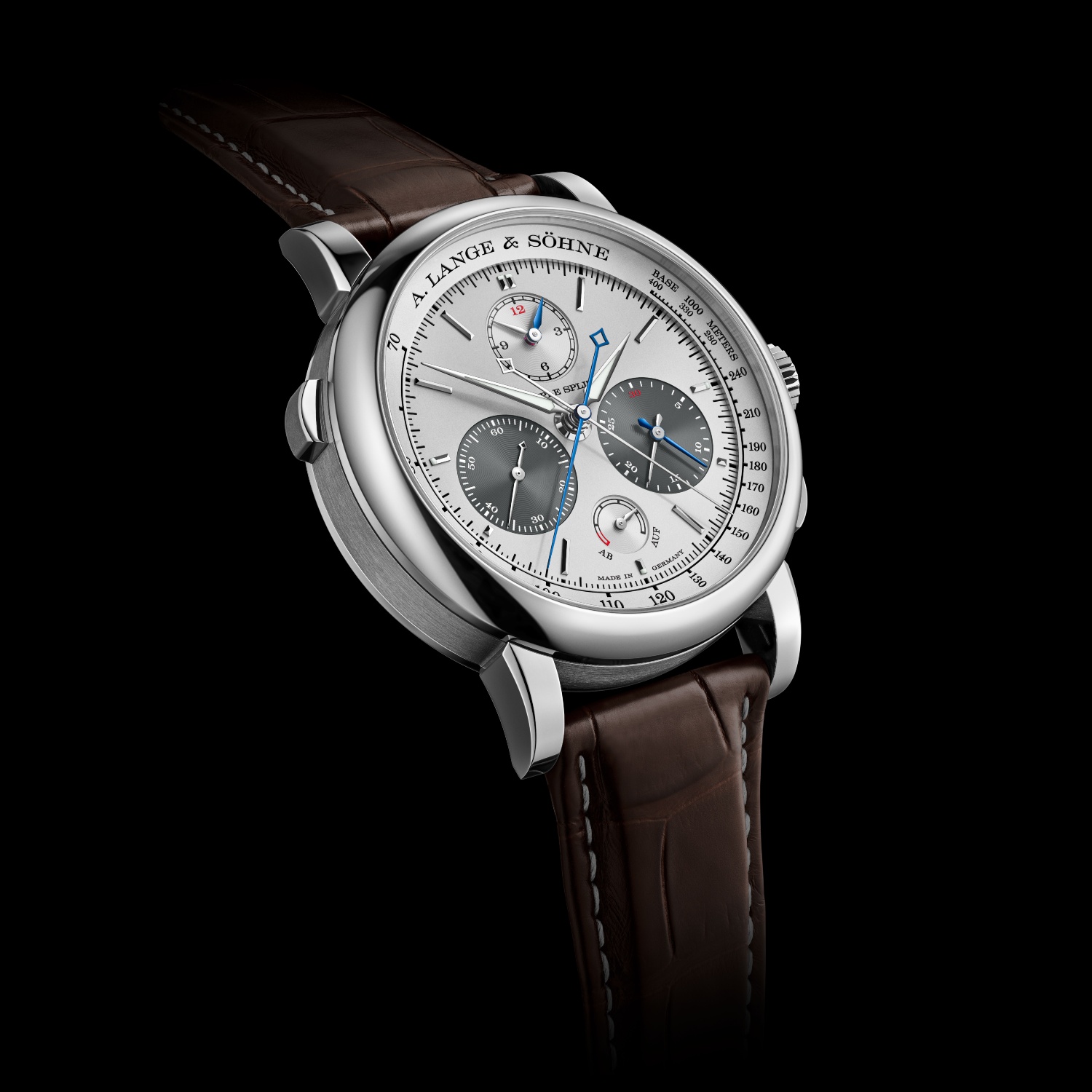
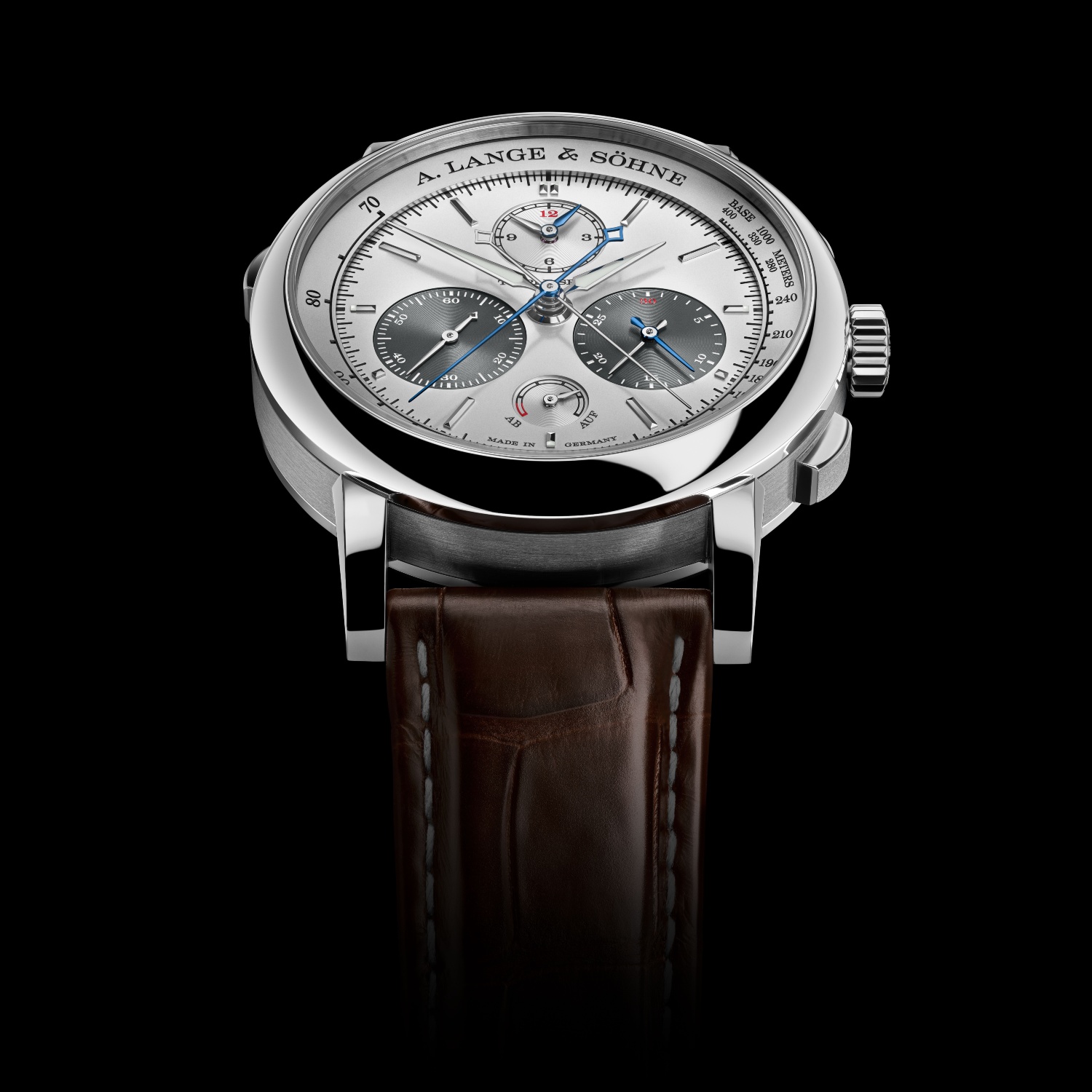
True to Schmid’s word, Lange debuted another conversation-starter at the Concours of Elegance 2026: the third iteration of the Triple Split. Perfect for the occasion in both spirit and style, the watch, a one-of-a-kind split-seconds (or rattrapante) chronograph, brimmed with horological significance and looked right at home among the legacy-laden automobiles.
Encased in a 43.2mm platinum case, with blued steel rattrapante hour, minute and second hands to mark its unique split-timing function (more on that later), the 2026 version of the Triple Split follows the 2018 debut in white gold with a grey dial, and a second edition from 2021 in pink gold with a blue dial.
Where the earlier editions gleamed with studied regality, the new model – limited to 100 pieces – suggests stealthy luxury with a tinge of sportiness, bearing a rhodié-coloured dial and darker grey auxiliary dials that could pass for a distant and more elegant cousin of the black-and-white panda-style dial colourway.
“It’s a lovely combination. Very elegant, and quite different from the previous two,” says Anthony de Haas, Lange’s Director of Product Development. “To make things more interesting, we added the grey sub-dials. It is almost an inverse of what we’d normally do. And that’s what fascinates me: what colours can do to give the same watch a different identity.”
Cosmetic lift aside, everything else that Lange collectors love about the Triple Split remains unchanged, much of which centres on the watch’s engine, the hand-wound calibre L132.1. Since its launch in 2018, the Triple Split has held a position unmatched anywhere else in modern watchmaking: it remains the only split-seconds chronograph in the world able to measure intermediate, comparative and total times for as long as 12 hours.
For context, a standard split-seconds chronograph can measure two interval timings of up to 60 seconds. This is courtesy of, as the name suggests, two superimposed chronograph second hands. When one activates the split-seconds pusher, the top hand stops to record the first interval. Meanwhile, the bottom hand continues its journey. Press the split-seconds pusher a second time, and the top hand snaps to join the bottom hand to continue the timing sequence.
When Lange introduced the Double Split in 2004, it added that comparative measurement from 60 seconds to 30 minutes. With this watch, there are now two split counters: one for 60 seconds, and another for 30 minutes.
Hour Angle
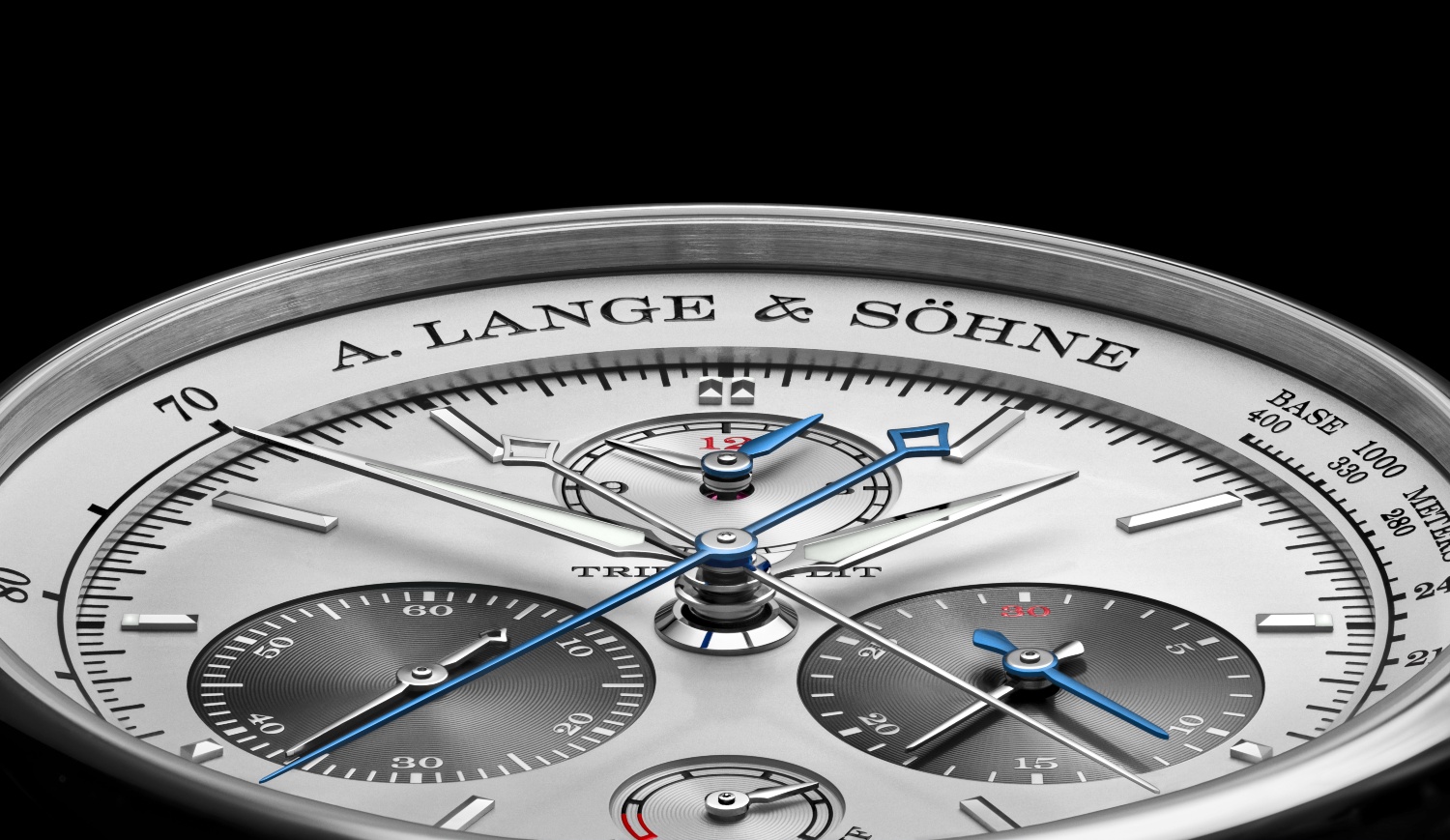
The Triple Split, which arrived some 14 years later – and just over a full century after the debut of the world’s first chronograph wristwatch – took things even further by including a split-hour counter, while extending the split-time measurement up to 12 hours. Also worth knowing: the Triple Split includes a flyback function, where a single press of the reset pusher stops the chronograph, snaps every hand back to zero, and instantly restarts a new measurement.
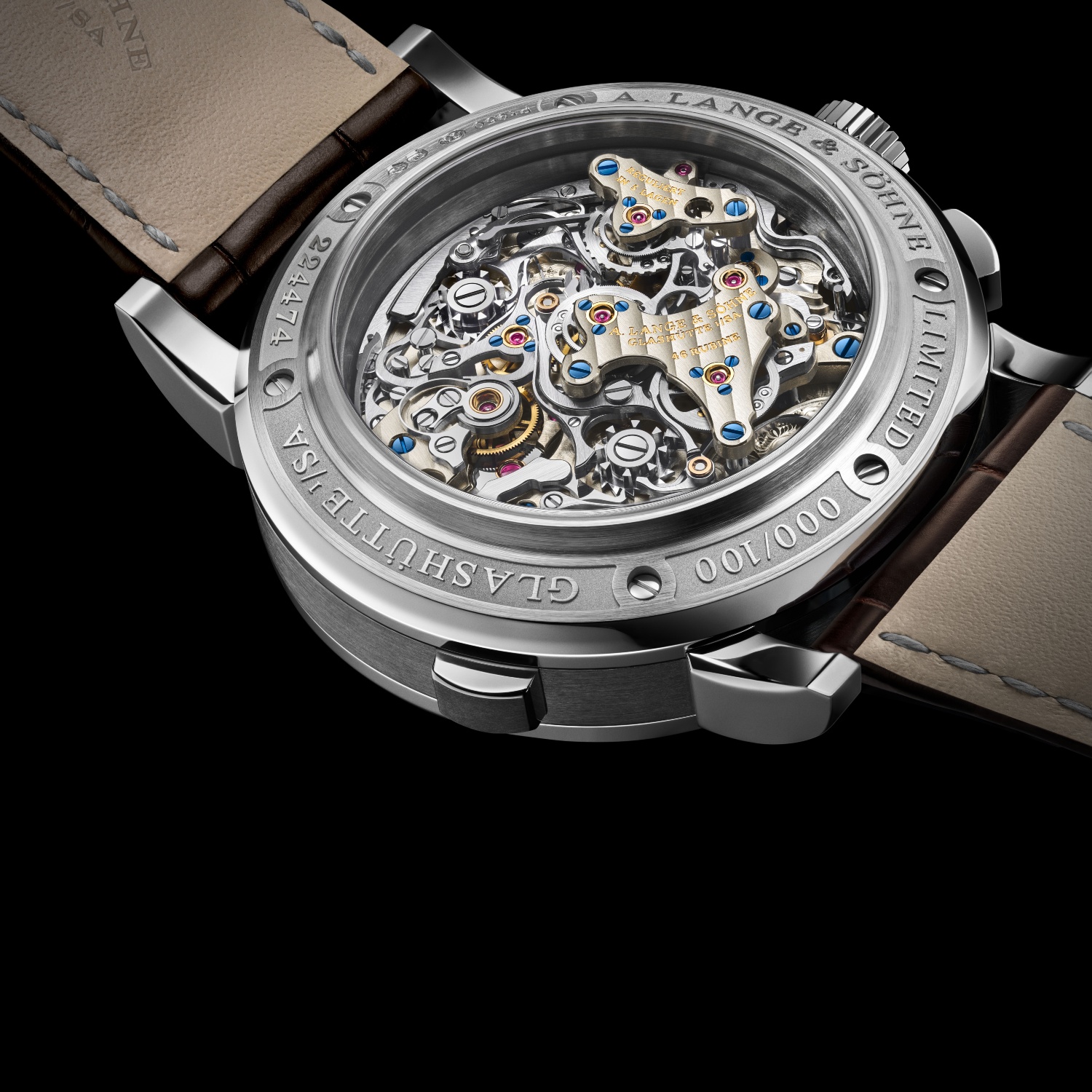
The construction of calibre L132.1 presented several engineering challenges. This included keeping the three pairs of superimposed hands – for seconds, minutes and hours – running in perfect sync, even while one set is frozen mid-measurement.
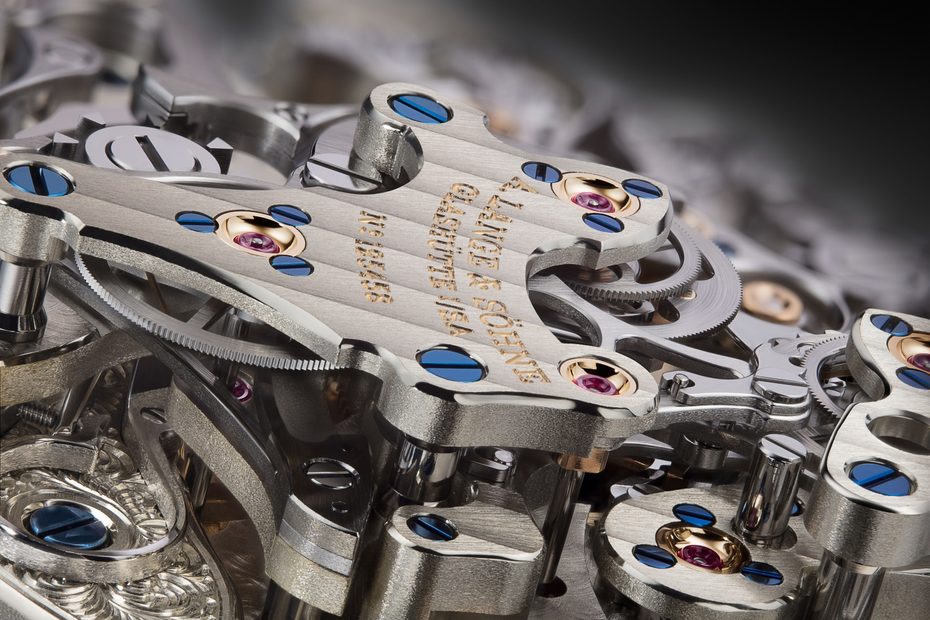
Left alone, the friction between a stopped rattrapante hand and the still-turning mechanism beneath it would sap power from the balance wheel, throwing off the watch’s rate regularity. To solve this, Lange devised a patented disengagement mechanism: the instant the rattrapante hands stop, tiny wheels lift the levers riding on them clear of the still-rotating cams, sparing the balance wheel that friction entirely.
The dial, too, holds several small surprises. Framed by a tachymeter scale, which converts elapsed time over a fixed 1,000m distance straight into average speed – a holdover from motorsport’s earliest chronographs – the chronograph interface appears to be business as usual. Nuanced details, however, emerge upon close inspection.
The jumping minute counter, for instance, advances by exactly one increment the moment 60 seconds elapse. Similar mechanisms existed in historic pocket watches, but Lange patented a way to fine-tune the precise timing of that jump using an adjustable lever, one that can still be calibrated even after the movement has been fully assembled. Even the 55-hour power reserve display needed rethinking. Compared with the Double Split, Lange shifted it lower on the dial to free up space for the Triple Split’s larger hour counter above.
For chronograph enthusiasts, the evolution of the complication that the Triple Split represented seemed long overdue. To de Haas, the leap is an altogether reasonable one.
“It’s a bit strange that the Triple Split is still unmatched. When we made the Double Split in 2004, it was based on a logical piece of thinking. For instance, if you know rattrapante chronographs, you have to ask why the rattrapante function is limited to a single minute. If you have two marathon runners, or two racing cars, that take several minutes to complete a lap, you need to be able to record ‘that’s one minute’ or ‘two minutes and 15 seconds’ – not just seconds within a minute. That was the idea behind the Double Split,” says de Haas.
One may assume that the Triple Split’s supercharged chronograph capabilities are a result of Lange flexing its technical chops simply because it can. For motoring endurance rally enthusiasts – or fans of marathons, audax, or any sort of long-distance sport – the feature makes perfect sense, even as it remains a one-of-a-kind mechanical marvel.
Consider timing a driver in an endurance race. From the moment the rally begins, the chronograph and rattrapante hands run together, superimposed as they track the same elapsed time. As the driver crosses a stage finish – whether it’s the first hour of the day or the fifth – a press of the rattrapante pusher on the left of the case freezes the rattrapante hands exactly where they stand, recording that stage’s precise time, hour counter included, while the main chronograph hands carry on uninterrupted toward the day’s running total. If one activates the rattrapante pusher again, the rattrapante hands will snap forward to rejoin the chronograph hands, ready to be frozen again at the next stage.
Chrono Logic
The Triple Split, while emblematic of Lange’s work with the chronograph complication, represents a chapter in a story that is still being written. And for Lange historians, that story began in 1999, when the brand introduced its first-ever chronograph, the Datograph.
Launched at the now-defunct Baselworld watch exposition – the world’s largest watch fair when it ran from 1917 to 2019 – the stately Datograph from what was then considered a relatively niche German watchmaking house proved to be a seismic affair.
At that time, most watch companies offered popular chronograph models in their repertoire. With the exception of a few, however, many of these marques were outfitting their chronographs with third-party movements, such as modified versions of the Valjoux 7750 and Frédéric Piguet calibre 1185 – workhorse automatic movements that were launched in the 1970s and 1980s, respectively, and are still in production today.
Lange’s own press materials are careful about how they phrase the Datograph’s significance, and it is worth being precise here too: at the time, in-house chronograph movements, designed and built from scratch by the brand selling the watch, were, in the company’s own words, “the exception.”
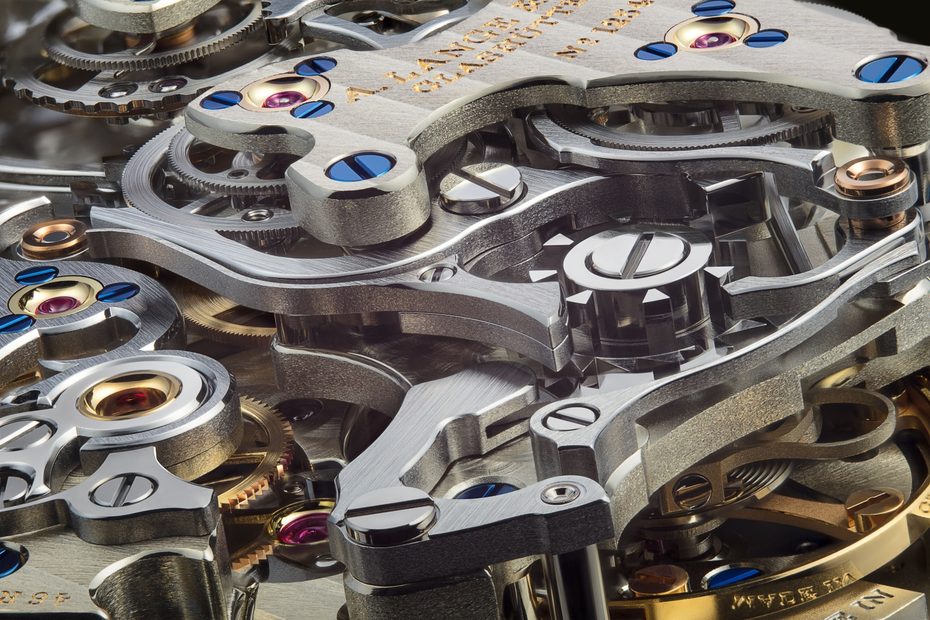
The Datograph’s calibre L951.1, which was developed entirely within Lange’s own workshops rather than adapted from a bought-in base, was Lange’s declaration that it intended to be judged on engineering it fully owned, not something that was sourced.
That declaration looked almost contrarian in 1999. Yet, it would portend major shifts in the watch industry in a few years. In 2002, the Swatch Group announced it would begin restricting supply of its ETA and Valjoux movements, which included workhorse engines powering the vast majority of the industry’s chronographs, to brands outside its own group. What had been a matter of pride for a handful of manufactures became, for many other brands, a matter of survival.
The Lange Difference
The episode, too, played some part in shaping how watch companies and collectors thought about what a “manufacture” watch meant. A movement built in-house stopped being a curiosity and became a badge of manufacturing authenticity. And nowhere was that credential harder to earn than in a chronograph, arguably among the most mechanically demanding complications a brand can build from scratch.
De Haas, who had just joined movement-making specialist Renaud & Papi at the time of the Datograph’s debut, remembers exactly what that engineering looked like the first time he saw it, in a prototype shown to him about a year before launch.
“When I gave notice at IWC Schaffhausen to join Renaud & Papi, I had to go and see Mr Günter Blümlein (the late entrepreneur behind the revival of brands including IWC and Lange, among others) and he tried to convince me to stay. He showed me a prototype of the Datograph. This must have been more than half a year before the launch. So, that was probably the first Lange watch I ever held,” he recalls. “I had never seen anything like it before. It was extraordinary.”
The calibre L951.1 certainly justified de Haas’ fascination. Formidably built yet graceful and elegant, the hand-wound movement was constructed around the classic column-wheel chronograph configuration, and fitted with an outsize date, a flyback function, and a precisely jumping minute counter. The information was arranged on a dial with the twin apertures for the date at 12 o’clock forming the apex of an imaginary triangle with the small seconds and minute counters at the base. The layout was so intuitive and geometrically clean that it immediately distinguished the look of the Lange chronograph for years to come.
De Haas visited the Lange booth at Baselworld when Lange launched the watch several months after he saw the Datograph prototype. It was a sizable space with a big replica display of the calibre L951.1 as a sculptural centrepiece. Together with his peers, de Haas went in and picked up a catalogue for reference.
“Back then, Lange produced catalogues with a centrefold of the movement. We tore that out and hung it up in the workshop. It was a holy grail; it was so beautiful, and it was a real ‘wow’ moment. That was probably the moment I got infected with the Lange bug,” he says.
The Long Game
The Datograph marked the start of Lange’s ambition with chronograph construction and, in turn, set the terms for every decision the watchmaking house would make about the complication in the ensuing decades. If one were to trace every chronograph reference that emerged from Lange from the Datograph to the Triple Split and beyond, one would recognise a modus operandi that permeates the company’s entire creative culture.
De Haas explains that, as with any other watch in Lange’s stable, his team never prioritises simply adding more features. Rather, they make deliberate and occasionally counterintuitive choices, each one weighed against a question they return to time and again: not “can we”, but “should we, and why?”
Instead of reworking a basic calibre and adapting it to a new model for manufacturing mileage, every A. Lange & Söhne chronograph reference features a movement that has been developed specifically for its style and application. Admittedly, this process is much slower than the watch business typically rewards. But from Lange’s perspective, it is absolutely vital to taking control of its own destiny and manufacturing know-how.
“Every single project increased our comprehension of this sophisticated complication and yielded new insights that were assimilated into subsequent developments. The outcome: exceptional expertise, enabling us to fully customise each chronograph movement to its applications and the individual design of the watch family,” said de Haas in an earlier press statement.
The leaps between innovations were no small matter. Following the Datograph in 1999, Lange premiered the Double Split in 2004 – a huge jump in terms of mechanical intelligence and movement engineering. Even then, de Haas revealed that his team was ready to move ahead with the idea for the Triple Split, but had to put the brakes on it to allow time and room for the Double Split to grow in the market.
“We chose not to introduce the Triple Split straight away because that would have meant the immediate end of the Double Split. That would have been a shame, given the investment in its development. So, 14 years after the Double Split’s launch, we launched the Triple Split. The thing is, in those 14 years, no other brand had done anything similar,” says de Haas.
Not that what another brand had done would have mattered. In that time, Lange simply powered through with its chronograph offerings, each upping the ante distinctively and decisively.
It Came from 1815
In the same year that Lange introduced the Double Split, it also debuted the 1815 Chronograph, a classically inspired iteration that sat at the opposite end of the spectrum from its fellow debutant. Like the Datograph, the 1815 Chronograph features a flyback chronograph, but eschews the outsize date display for an aesthetic that evokes the look of historical pocket watches made by the brand’s founder, Ferdinand Adolph Lange.
With the two models, Lange presented a vision for the complication that would be expansive and multi-faceted. References such as the Datograph Up/Down and Odysseus Chronograph, introduced in 2012 and 2023, respectively, articulated the brand’s work on the utilitarian aspects of the complication. The Datograph Up/Down extends the movement’s power reserve to 60 hours, while the Odysseus Chronograph is powered by the L156.1 calibre – entering Lange’s record books as the brand’s first automatic chronograph movement.
At the same time, the brand also took the chronograph into multi-complication territory to establish another avenue for creative expression. The Datograph Perpetual from 2006 paired a chronograph and perpetual calendar for the first time in a Lange wristwatch. In 2013, the brand debuted two more epochal models: the 1815 Rattrapante Perpetual Calendar, which paired a split-seconds chronograph with a perpetual calendar; and the Grand Complication, one of the most complex watches to come out of Germany, which features a split-seconds chronograph with a minute counter and flying seconds, a chiming mechanism with a grand and small strike, a minute repeater, and a perpetual calendar.
The chronograph also played a starring role in Lange’s most technically accomplished creations. The Datograph Perpetual Tourbillon from 2016 pairs three complications – flyback chronograph with a precisely jumping minute counter; an instantaneously jumping perpetual calendar with outsize date; and a one-minute-tourbillon with stop-seconds mechanism. The Tourbograph Perpetual “Pour le Mérite”, the so-called “fifth masterpiece” in Lange’s “Pour le Mérite” series of watches powered by movements with a fusée-and-chain transmission system, features a one-minute tourbillon, a classic chronograph with rattrapante function, and a perpetual calendar.
Lange’s track record of 13 chronograph creations in the span of 27 years – conceived entirely in-house from sketch to product – is hard to match. Even de Haas appears slightly stumped when reflecting on the incredible output. But if there is one thing he is clear about, it is the purity of vision that has directed Lange’s work with chronographs, or any of its watches, for that matter. He recalls speaking with the watchmakers at Lange shortly after the passing of Mr. Blümlein and discussing the Datograph, the chronograph that started it all.
“You could feel it from the way they spoke. They were humble, but also extremely proud – they’d never expected the Datograph to be received so well,” he says. “They’d simply made the Datograph the way they believed a Lange chronograph should be made. But we don’t sit and wonder what impact a watch will have when we make it – we still don’t think about it that way. We simply make watches we like, present them to the world, and hope people like them too.”
Blue Harmony: 1815 Up/Down Special Editions
While the one-and-only-champion-of-the-chronographs Triple Split flexed Glashütte’s most technical muscles on the lawns of Hampton Court Palace, A. Lange & Söhne quietly balanced the ledger with a masterclass in classical Saxon restraint: two new editions of the 1815 Up/Down.
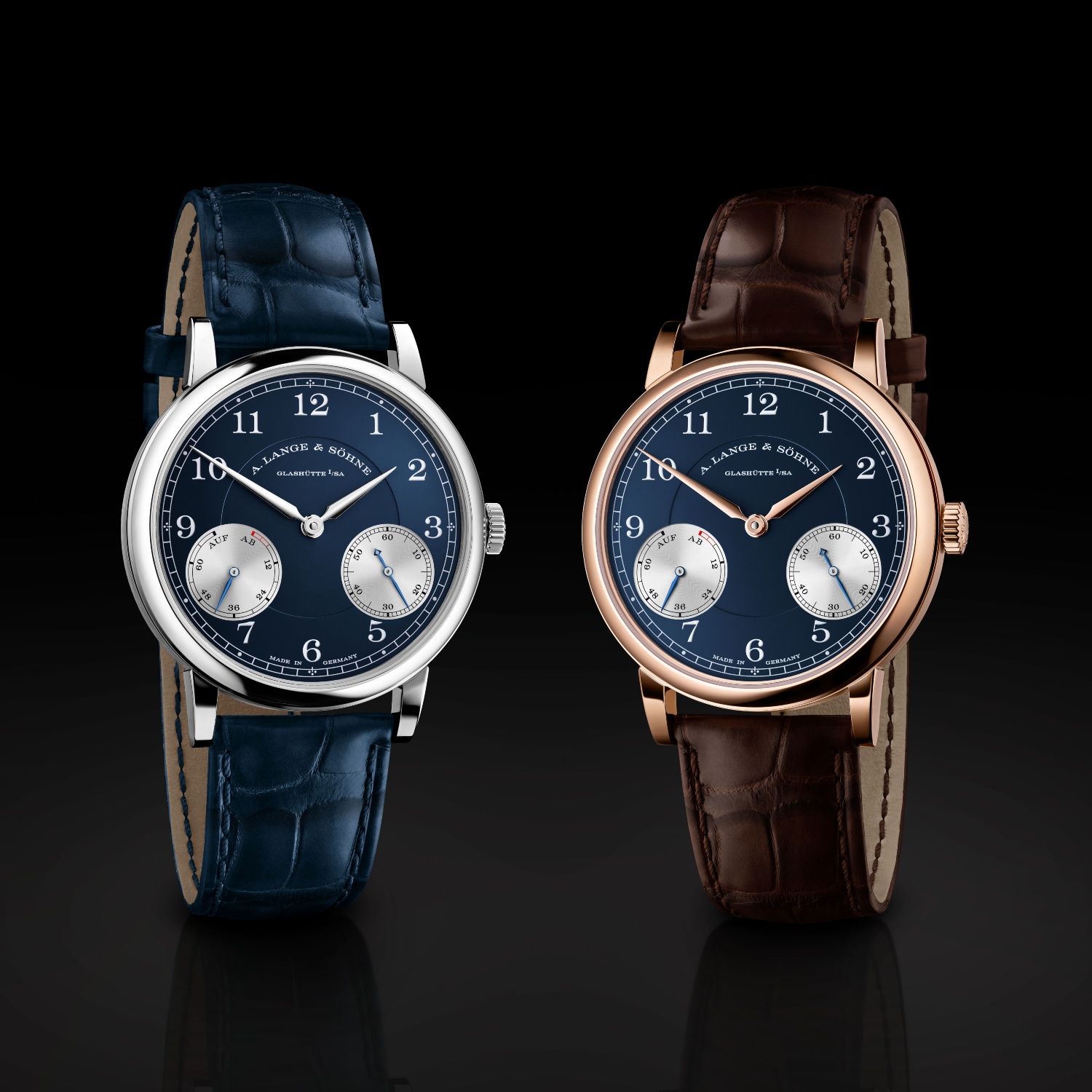
If the Triple Split represents the apex of mechanical watchmaking complexity, the 1815 Up/Down occupies the opposite pole of the Lange universe: pure pocket-watch-inspired aesthetics where details matter. Unveiled concurrently at the 2026 Concours of Elegance, these two 300-piece limited editions – cased in white gold and pink gold – bring an alluring, contemporary dial colourway to one of Glashütte’s most enduring signatures.
Named after the birth year of founder Ferdinand Adolph Lange, the 1815 family is defined by railway-track chapter rings that harken to the 19th century; crisp Arabic numerals; and a recessed central dial tier. Here, those traditional Saxon codes are cast against a solid 925 silver dial finished in rich ink-blue, dramatically offset by recessed, argenté-coloured auxiliary dials at 4 and 8 o’clock. Lancet hands matching the case metal indicate the hours and minutes, while heat-blued steel hands track the running small seconds and remaining autonomy. At 37.5mm in diameter and a slender 8.7mm thick, the case proportions remain an object lesson in ergonomic elegance.
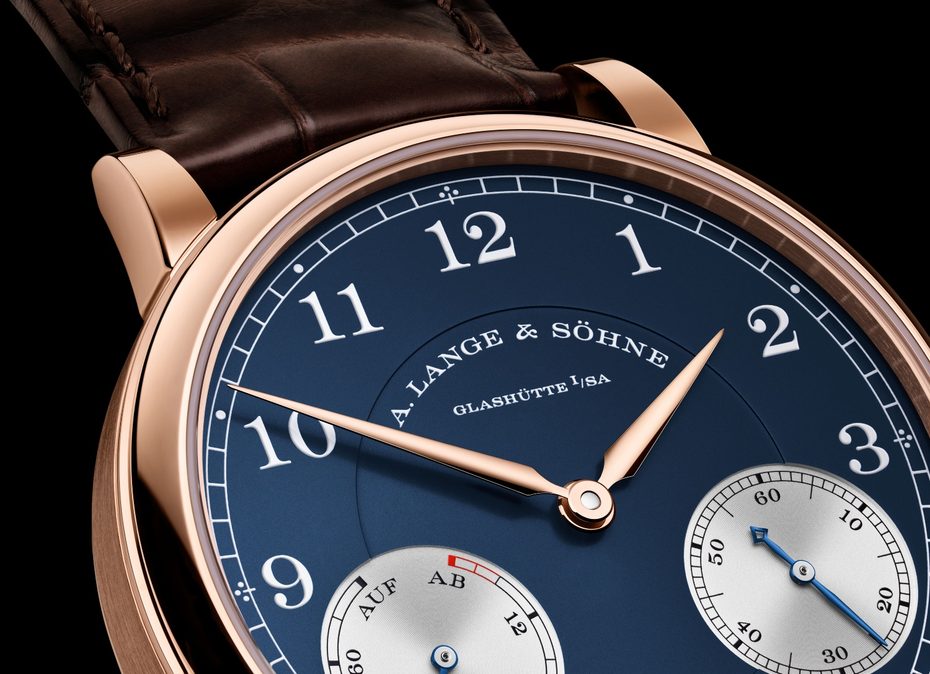
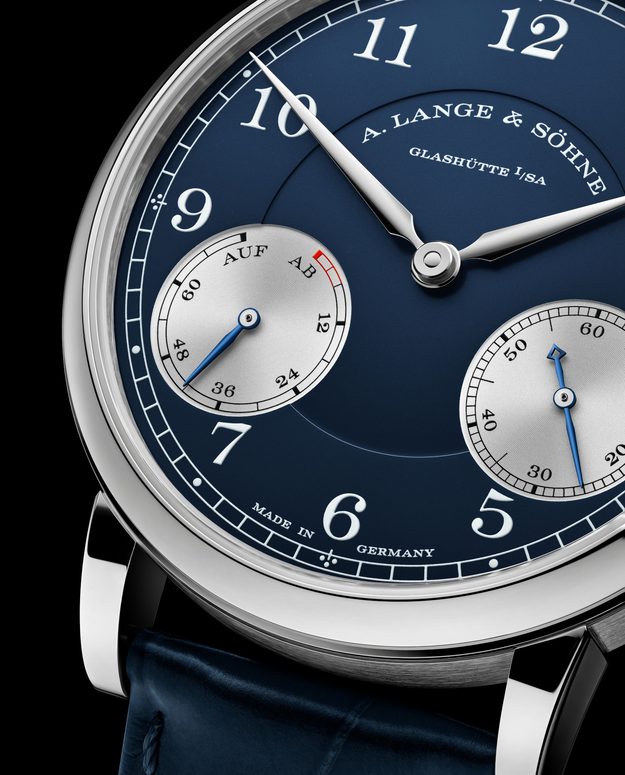
Cross over the lip of the stepped bezel and you will find an indicator steeped in Saxon horological lore on the blue silver dial: the AUF/AB (Up/Down) display. First patented by Lange in 1879 for pocket watches, “AUF” denotes fully wound (72 hours of power reserve), while “AB” marks the opposite. Crucially, in typical Lange fashion, this complication is not a perfunctory module slapped atop an existing base. Within the hand-wound manufacture calibre L051.2, the power-reserve mechanism is directly integrated using an ingenious, space-saving planetary gear train.
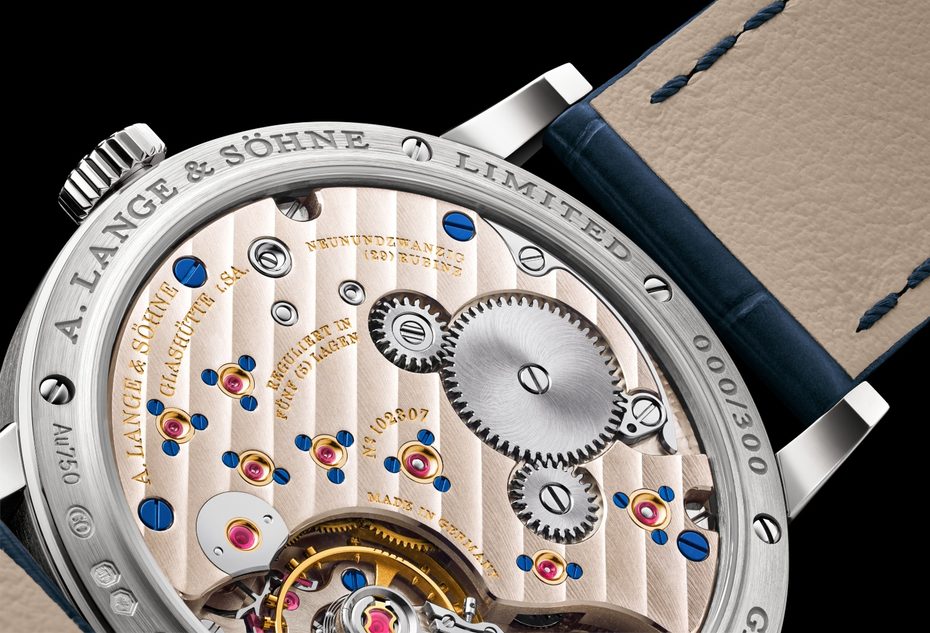
On that note, turn the watch over, and the sapphire-crystal caseback reveals the quintessential Saxon landscape: an expansive three-quarter plate in untreated German silver, seven screwed gold chatons, solarised winding wheels, and an in-house balance spring beating beneath a hand-engraved balance cock. Alongside the roar of vintage racing engines and the split-seconds wizardry of the Triple Split, these two 1815 models offer collectors a serene reminder of what Lange achieves when it strips watchmaking down to its purest essence.
Images courtesy of A. Lange & Söhne.
For more on the latest in luxury watch reads, click here.
The post A. Lange & Söhne Shifts Chronograph Watchmaking Into High Gear appeared first on LUXUO.