8 Visionary Chairs and the Inspiration Behind Their Design
LUXUO explores a new wave of designers who challenge conventional furniture design, elevating the chair from a functional object to a collectible work of art. Through material experimentation, narrative depth and sculptural intent, seating is being reimagined across galleries, design fairs and limited-edition platforms. These creations operate as both design and discourse, often drawing on personal experiences, environmental insights or cultural references to add layers of meaning beyond form and function.
This new wave distinguishes itself through a deliberate rejection of mass production. Many of these chairs are limited editions or one-of-a-kind pieces, placing conceptual depth and craftsmanship above scalability. Designers often employ precision-cast metals, salvaged industrial materials and other unconventional mediums to reinforce the work’s central concept. This results in seating that commands attention and transforms a room into a stage for design. From Seoul to Paris, these creators use chairs as storytelling devices — where form, texture and structure converge to convey a distinct vision grounded in inspiration and intent.
Reclaimed Narratives: Sae Jung Oh’s Salvage Chair
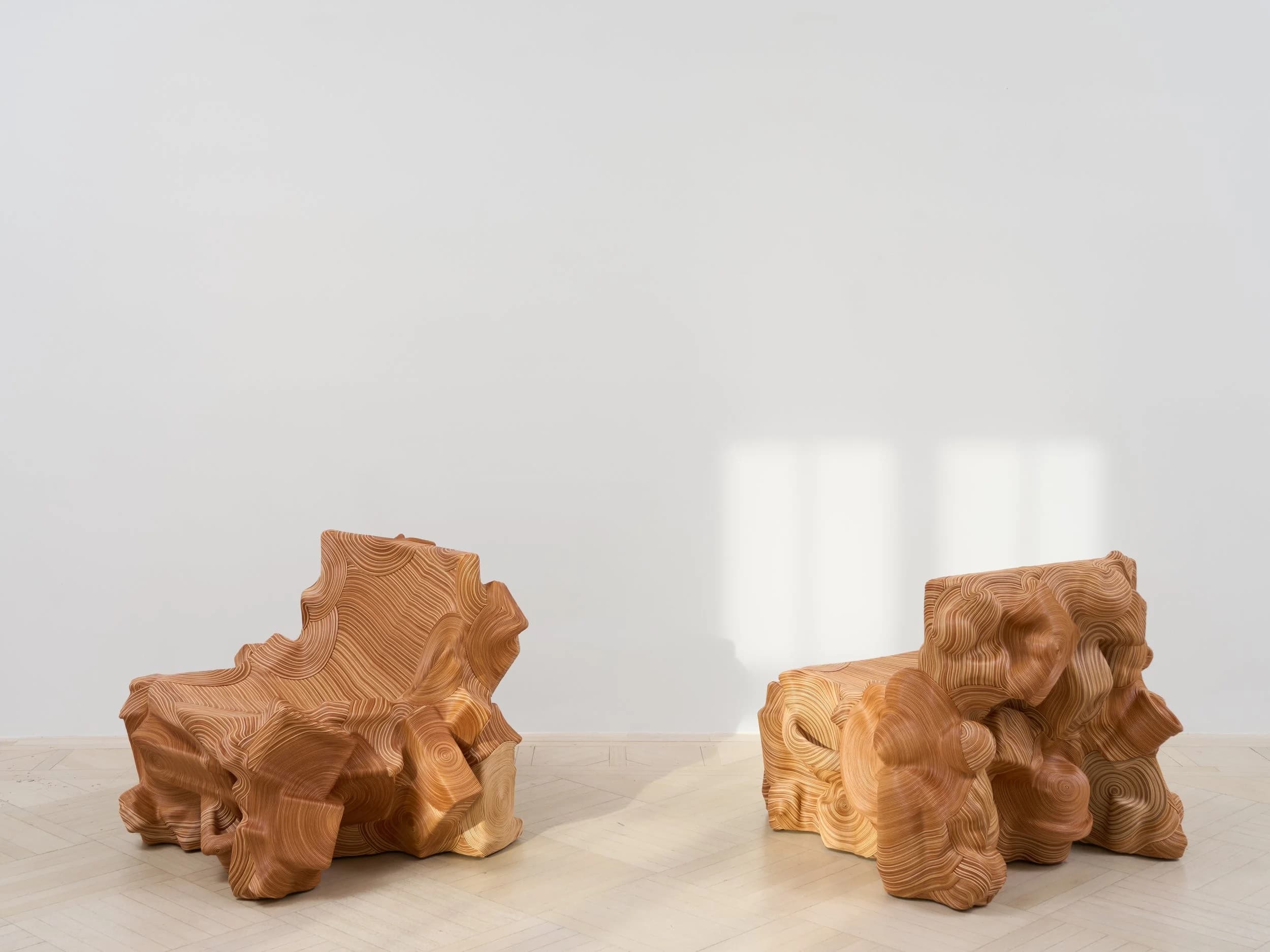
The Salvage chair by Sae Jung Oh creates a unified sculptural shape out of abandoned urban elements. The chair — which is made of discarded objects such as cables and salvaged metal parts — is an example of a process-driven, reconstruction-based approach. A multi-layered story is woven throughout the structure as each piece preserves remnants of its former existence. Engineering issues arise from the uneven composition, especially when it comes to maintaining spontaneity while ensuring balance and usefulness. Overlooked industrial trash that has been transformed into valuable things is the source of inspiration. The product is a unique product that elevates raw materiality into collectable design while challenging notions of consumerism.
Liquid Form: Faye Toogood’s Roly-Poly Raw Chair
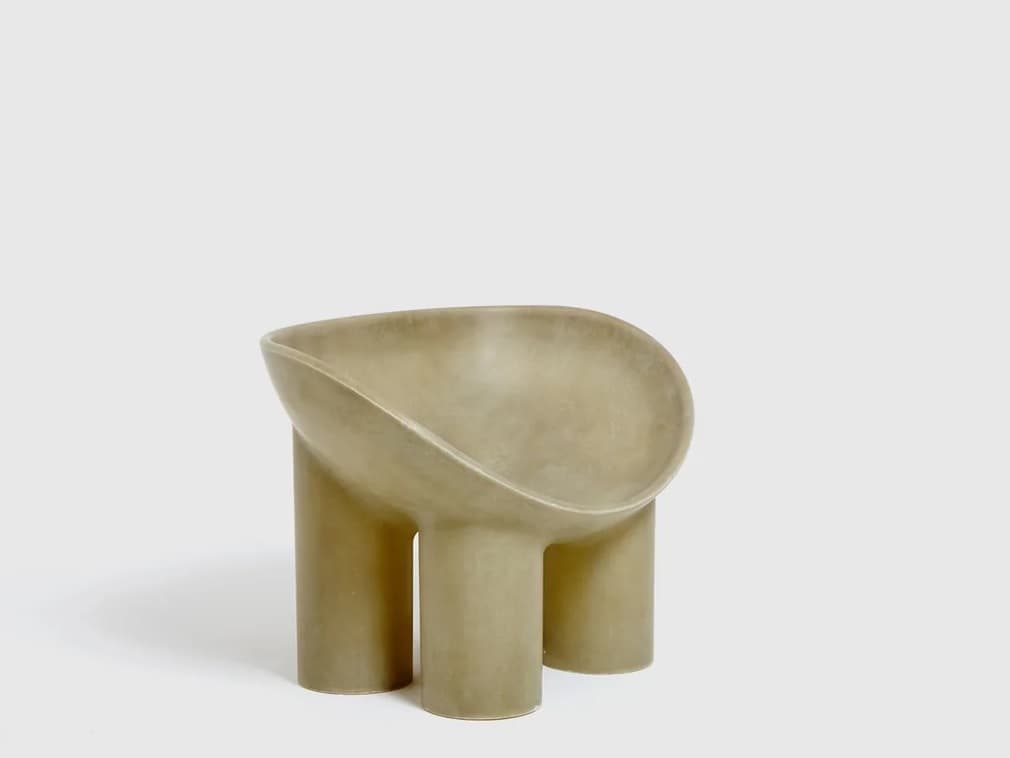
The most recent version of the Roly-Poly Chair by Faye Toogood deepens her investigation of exaggerated form and tactility. The new chair — dubbed “Roly-Poly Raw” — draws the same bulbous dimensions from the original design, but it is now cast in fibreglass with a softened, almost molten appearance — challenging conventional ergonomics. The design emphasises volume over linearity and is influenced by early sculptural forms and rudimentary seats. It took rigorous weight distribution calibration to achieve structural integrity within such a rounded shape.
Heritage Recast: Jiri Krejcirik’s Ode to Chair 14
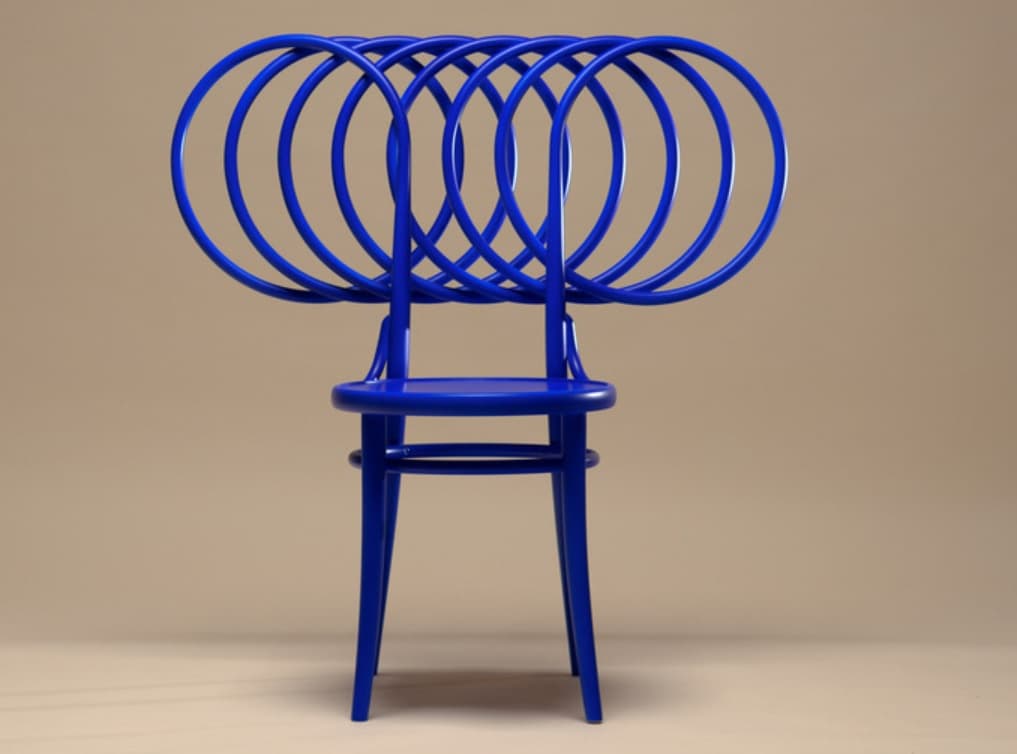
The traditional bentwood typology is transformed into a sculptural statement in Krejcirik’s Ode to Chair 14. The design introduces large circular backrest elements that challenge structural familiarity, thereby exaggerating classic approaches to furniture. The chair — made using preexisting moulds — examines the conflict between expressive form and industrial tradition. Precise engineering was needed to achieve stability within such extended and expressive geometry. The outcome is a limited-edition piece that raises the question of how far a rudimentary design may be altered before it becomes a standalone work of art.
Industrial Poetics: Sabine Marcelis’ Gradient Resin Seat
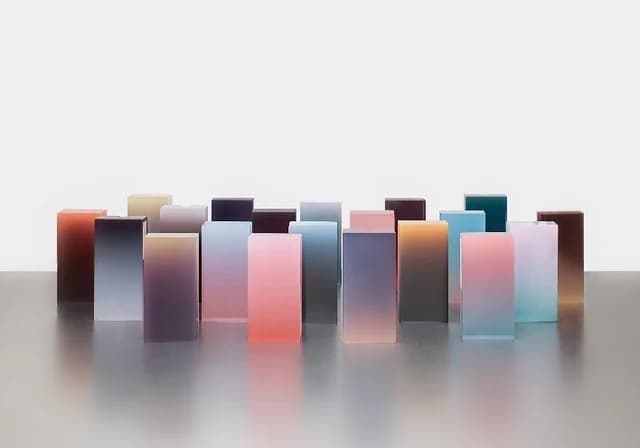
With a limited-edition resin chair marked by its gradient finish, Sabine Marcelis explores the interplay of light and translucency. The material absorbs and disperses light, producing subtle tonal variations across its surface. Production is technically demanding and time-intensive, as precision casting is required to maintain clarity and prevent imperfections. Natural light — particularly the colour shifts at dawn and dusk — serves as the primary inspiration. Marcelis’ focus on sensory experience is heightened by the chair’s dual role as both seating and a light-responsive object.
Structural Expression: Nacho Carbonell’s Growth Chair
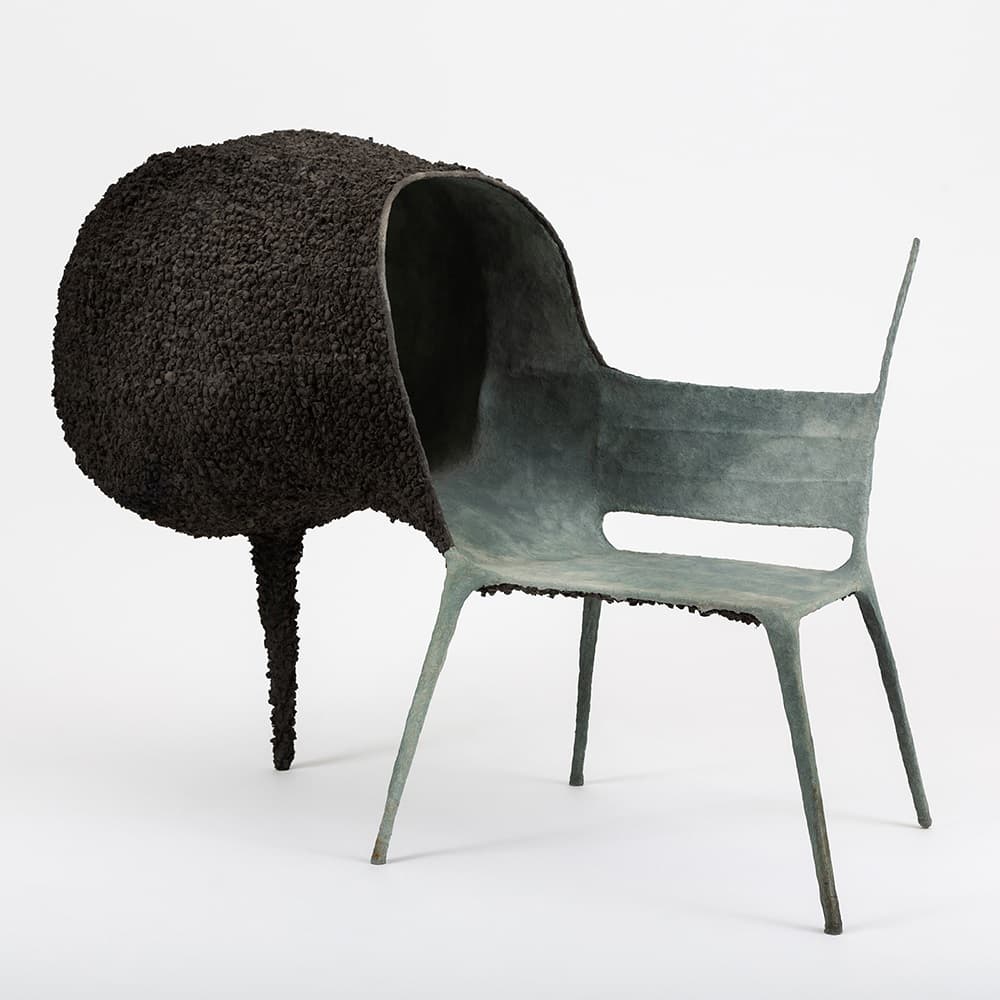
The Growth Chair by Nacho Carbonell continues an exploration into material stacking and organic extension. The chair — which is made of steel, epoxy and textile — seems to grow outward like a living thing. Layers are manually assembled during the fabrication process, adding unpredictability to the finished product. It is quite difficult to maintain structural coherence in such an expressive silhouette. Natural development patterns and the notion that furniture is an extension of the surroundings serve as inspiration. The chair does not follow traditional symmetry; rather, it favours an intuitive, almost haphazard, organic aesthetic.
Sculptural Comfort: Raphael Navot’s Whale Armchair
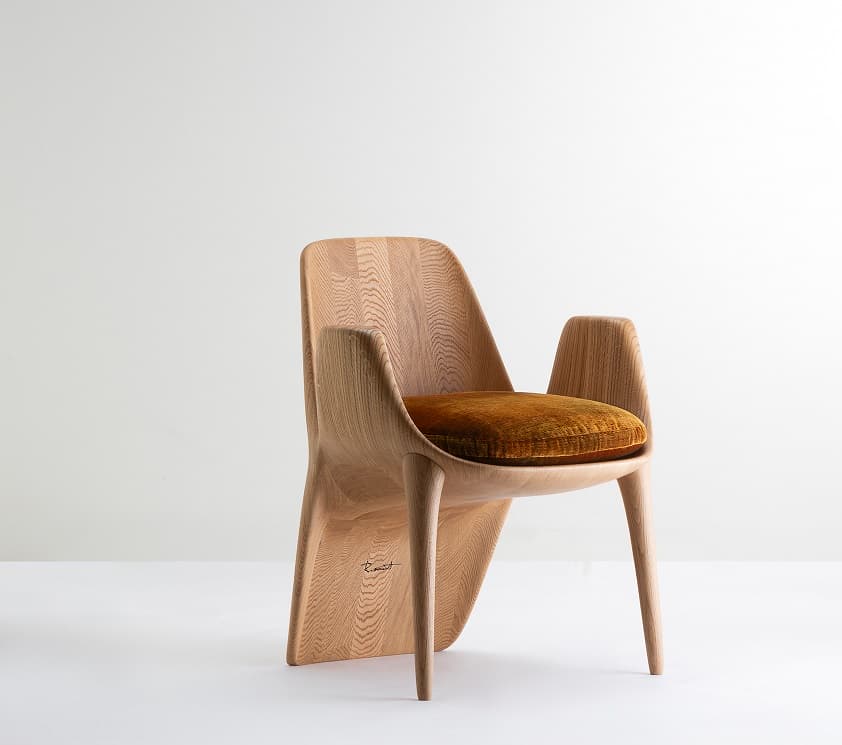
The Whale chair by Raphael Navot combines domestic utility with sculptural prominence. The chair — which strikes a balance between monumentality and cosy comfort — is made of carved wood and has upholstered seating that resembles the natural curves of a whale. To create fluidity without sacrificing structural integrity, the design needed careful manipulation of solid materials. Natural forms serve as the inspiration, transforming the grace of marine life into a limited-edition, gallery-ready piece. The purposeful exaggeration of each shape encourages both tactile engagement and visual reflection. The chair shows Navot’s focus on materials and space, turning a simple seat into a collectable piece of art.
Artsy Aesthetic: China Chair by Chen Darui
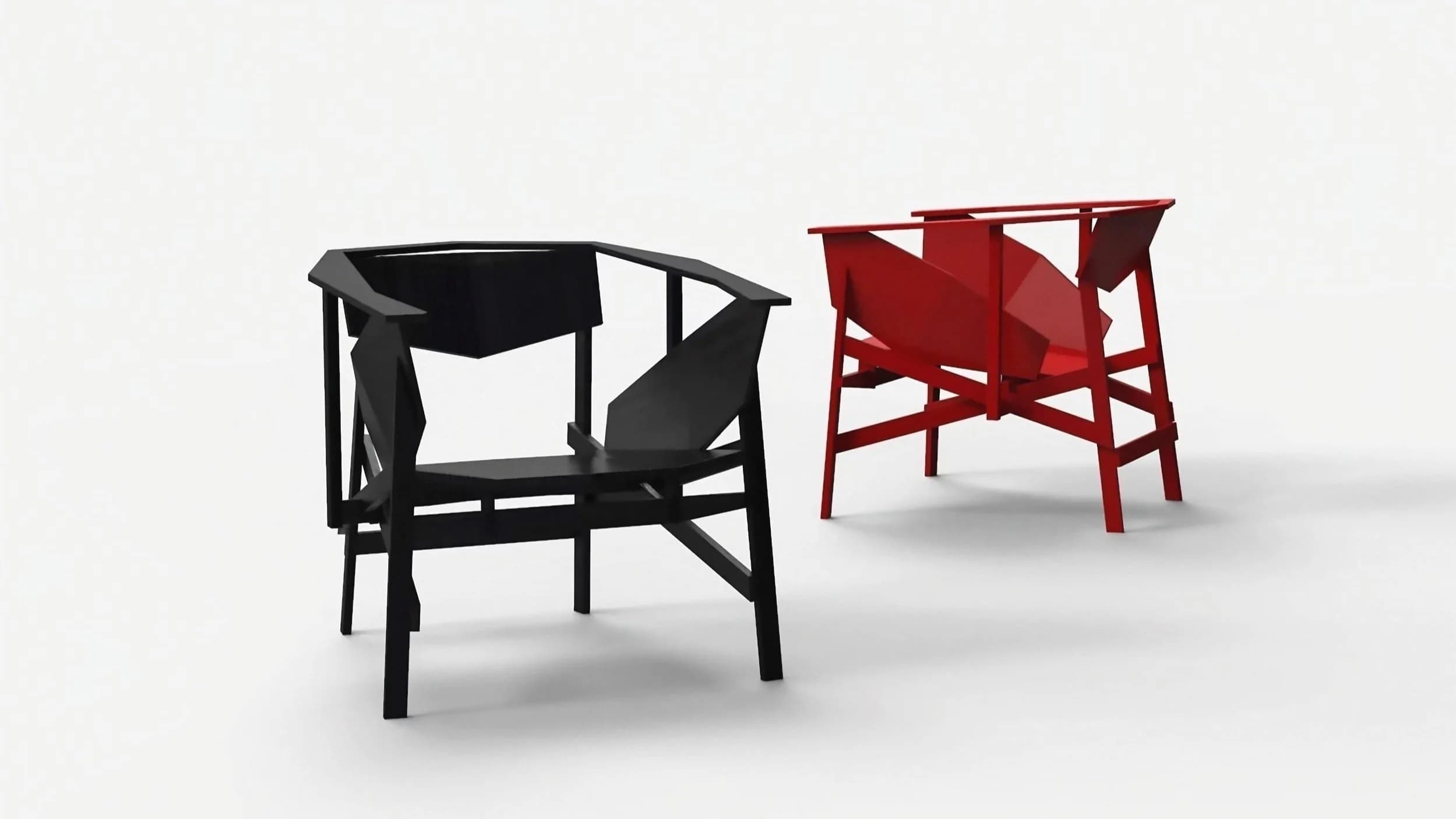
Chen Darui’s China Chair transforms traditional seating logic into a sculptural, aggressively geometric shape. The chair is made of oak with a rich black or red lacquer finish, combining architectural precision with a sense of history, shown through its intersecting planes and sharp angles. The design idea challenges the importance of utilitarian simplicity in favour of expressive structure and is the result of a purposeful “demolition” of Western modernist aspirations. The sculpture retains its utilitarian integrity as seating while exploring balance and asymmetry in each plane and angle.
Only available in 199 signed pieces, the chair is both an interior feature and a conceptual item that encourages reflection on how innovation and tradition may coexist in one frame. Designed in 2024, it is firmly positioned among the collectable design scene thanks to its strong sculptural character and limited-edition status.
Digital Craft: Jean‑Baptiste Anotin “Godspeed Object” Chair
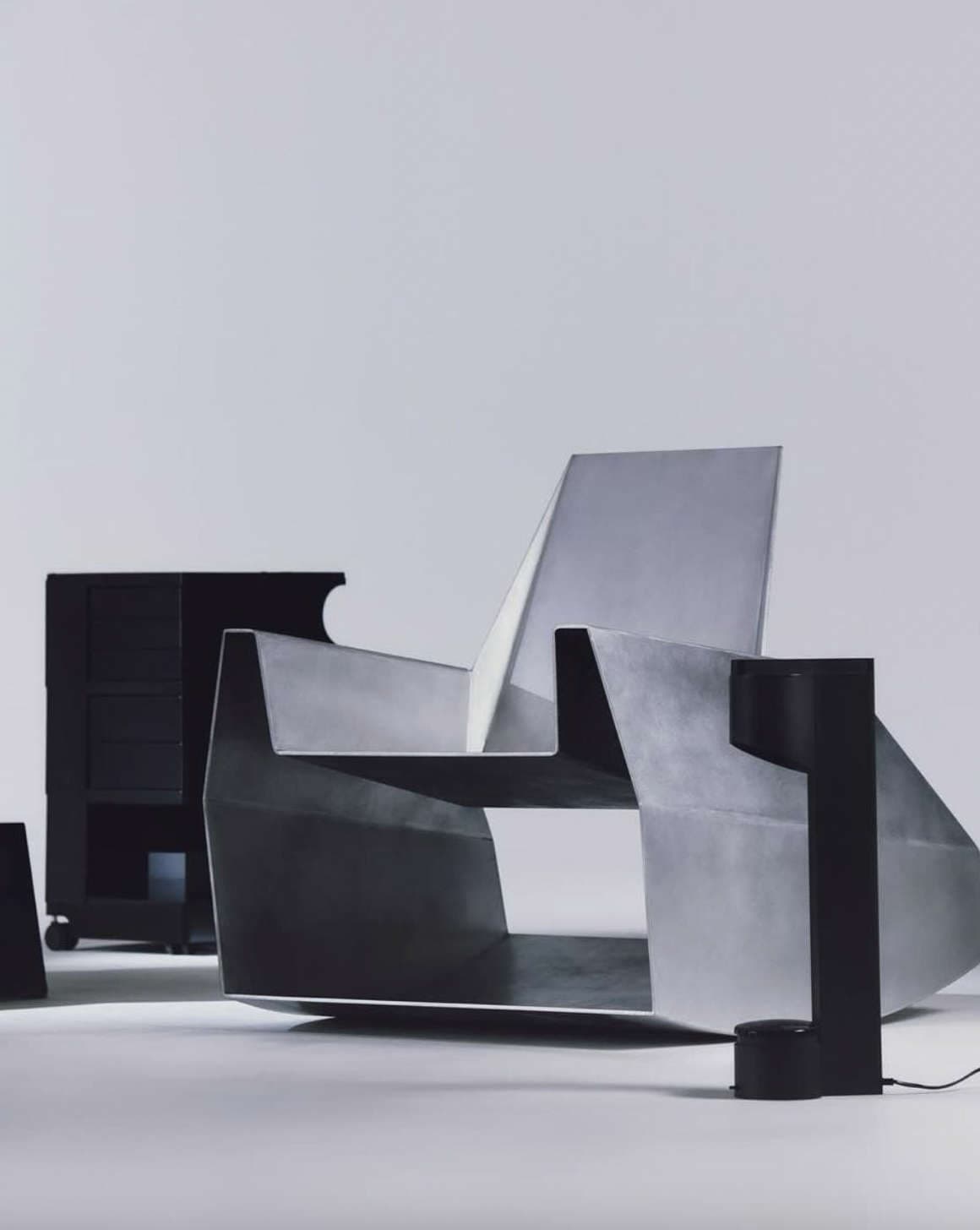
The sculptural armchair designed by Jean-Baptiste Anotin does not conceal itself in a corner. It reads like a piece of modern art one can sit on and was created at his Paris studio, “Waiting for Ideas”. There are only eight pieces in the world. Shaped aluminium pieces and precise geometry make up its alluring design, which pays homage to industrial processes. A functioning object becomes a moment of pause when light and reflection are captured by its glistening surface. The chair anchors a space like a spectacular sculpture. Furniture in Anotin’s hands becomes something one would find rather than utilise.
Take a Seat
These chairs represent a larger change in modern design, where value is no longer determined only by function. Rather, narrative, process and material inquiry are prioritised. Whether inspired by nature, technology or urban debris, each work displays a unique interpretation of inspiration — all dedicated to pushing the limits of what a “simple” chair may symbolise. The humble chair has become an essential tool for experimentation as collector design continues to gain popularity. These pieces — which fall between art and interior design — redefine exclusivity via creativity and purpose, providing a window into a future in which furniture functions as both an idea and an object.
For more decor reads, click here.
The post 8 Visionary Chairs and the Inspiration Behind Their Design appeared first on LUXUO.